Open


How Compression Stockings Can Help During Pregnancy: Benefits, Circulation and Swollen Feet
Pregnancy brings many changes to your body, and some of the most noticeable happen in your feet and legs. Swollen ankles, tired legs, aching feet and varicose veins are common complaints, especially as pregnancy progresses.
But why does pregnancy cause these symptoms, and what can you do about them?
Compression stockings can help improve blood circulation in the legs, reduce swelling and relieve feelings of heaviness and discomfort during pregnancy. They work by applying graduated pressure to the legs, helping blood move upward toward the heart instead of pooling in the lower extremities.
For many pregnant people, properly fitted compression stockings can be a simple, non-invasive way to improve everyday comfort.
At Feet First Clinic, we can help you find properly fitted compression stockings based on your measurements, needs and prescribed compression level.
Key Takeaways: Compression Stockings During Pregnancy
- Compression stockings can help reduce swelling in the feet, ankles and legs during pregnancy.
- Pregnancy increases blood volume and fluid retention, while hormonal changes and pressure from the growing uterus can make it harder for blood to return from the legs to the heart.
- Graduated compression stockings apply the greatest pressure at the ankle, with pressure gradually decreasing higher up the leg.
- This pressure supports venous blood flow, helping reduce fluid buildup and feelings of heaviness or fatigue.
- Compression stockings can also help relieve symptoms associated with pregnancy-related varicose veins.
- Many people find compression stockings most helpful when worn during the day, particularly when standing or sitting for long periods.
- Proper sizing matters. Compression stockings should feel supportive without causing pain, numbness or excessive tightness.
- Your maternity healthcare provider can help determine the appropriate compression level, particularly if you have circulation problems or other medical conditions.
Feet First Clinic offers compression stocking fittings to help pregnant patients find the appropriate size, length and style for their needs.
Why Do Feet and Legs Swell During Pregnancy?
Swelling during pregnancy, also called edema, happens when excess fluid collects in the body’s tissues.
During pregnancy, your body retains more fluid than usual. Hormonal changes also affect blood vessels, while the growing uterus places pressure on veins that carry blood from the lower body back toward the heart.
These changes can slow the return of blood from the legs and contribute to fluid accumulating in the feet and ankles.
Gravity also plays a role. When you spend long periods standing or sitting, fluid can collect in the lower extremities, making swelling more noticeable toward the end of the day.
According to the NHS, pregnancy-related swelling commonly affects the feet, ankles and legs, especially after prolonged standing or during hot weather.
Figure 1: Why Pregnancy Causes Swollen Feet and Ankles
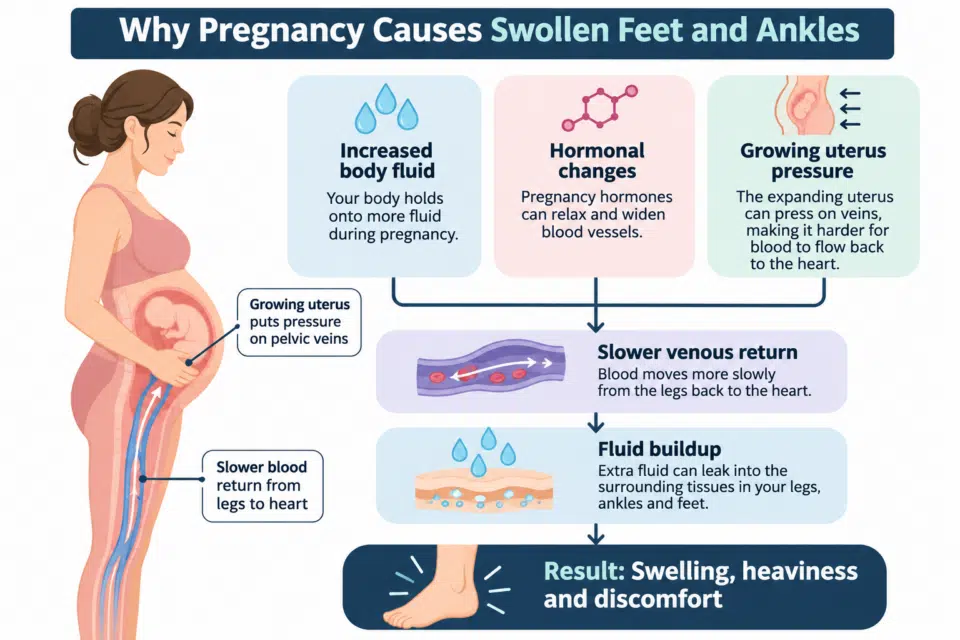
Figure 1. Pregnancy-related swelling occurs when increased fluid retention, hormonal changes and pressure from the growing uterus affect circulation and allow fluid to accumulate in the lower legs, ankles and feet.
How Do Compression Stockings Work During Pregnancy?
Compression stockings work by applying controlled pressure to the legs to support circulation and help blood return toward the heart.
Unlike regular socks, medical graduated compression stockings are designed to provide different amounts of pressure along the leg.
The pressure is typically:
- Strongest at the ankle, where blood must work against gravity to travel upward.
- Gradually reduced up the calf, supporting blood movement through the veins.
- Lower higher up the leg, allowing blood to continue flowing toward the heart.
This graduated pressure helps reduce the amount of blood pooling in the lower legs. It can also help limit fluid leaking into surrounding tissues, reducing swelling.
Compression works alongside the body’s natural circulation system, particularly the calf muscle pump, which helps move blood upward when you walk or flex your ankles.
Figure 2: How Graduated Compression Improves Circulation
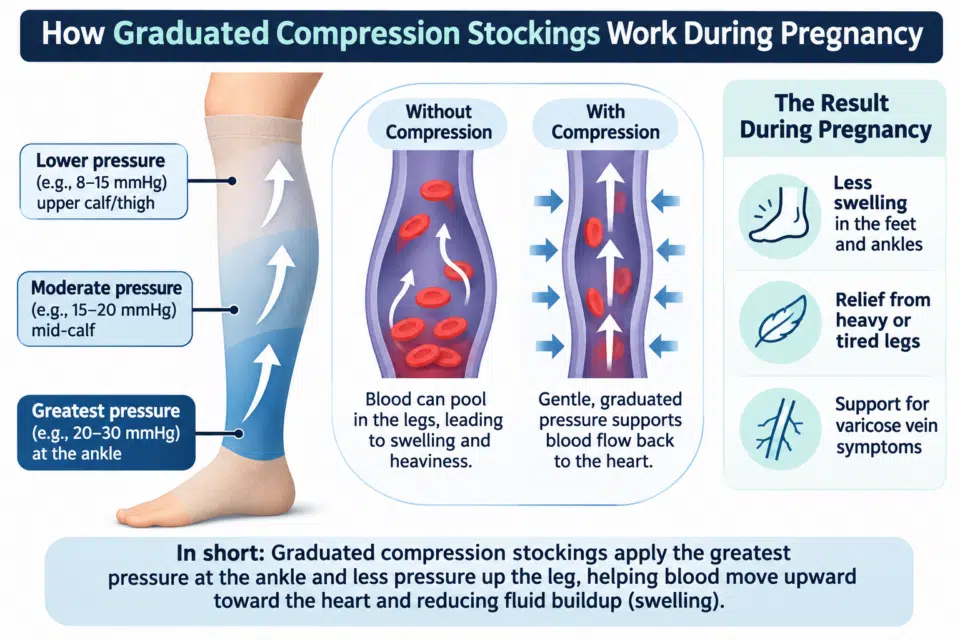
Figure 2. Graduated compression stockings provide the greatest pressure at the ankle, with pressure decreasing up the leg. This supports venous return toward the heart and helps reduce blood pooling and swelling in the lower extremities.
5 Benefits of Wearing Compression Stockings During Pregnancy
1. Reduce Swelling in the Feet and Ankles
One of the most common reasons pregnant people wear compression stockings is to manage swollen feet and ankles.
By supporting venous circulation, compression stockings can help reduce fluid buildup in the lower legs.
This may make it easier to wear shoes comfortably and reduce the feeling of tightness or puffiness around the ankles.
Compression stockings are among the measures recommended for managing normal pregnancy-related leg swelling, alongside leg elevation and regular movement.
2. Relieve Tired, Heavy and Aching Legs
Do your legs feel especially tired or heavy by the end of the day?
During pregnancy, changes in circulation can contribute to aching, fatigue and heaviness in the legs.
Compression stockings may help relieve these symptoms by supporting venous blood flow and reducing pooling in the lower extremities.
They can be particularly helpful for people who spend long periods standing or sitting, such as healthcare workers, teachers and office workers.
3. Help Manage Varicose Vein Symptoms
Varicose veins are enlarged, twisted veins that commonly appear in the legs.
Pregnancy can contribute to varicose veins because hormonal changes affect vein walls and increased pressure in the abdomen can make it more difficult for blood to return from the legs.
Compression stockings may help relieve associated symptoms such as:
- Aching
- Heaviness
- Swelling
- Leg discomfort
Although compression stockings do not necessarily prevent varicose veins from developing or make existing veins disappear, they can help manage symptoms.
The NHS recommends trying compression stockings for symptom relief during pregnancy.
4. Support Circulation During Prolonged Sitting or Standing
Remaining in one position for long periods can allow blood and fluid to collect in the lower legs.
Compression stockings may be helpful during:
- Long work shifts
- Desk work
- Travel
- Extended periods of standing
- Days when swelling is particularly noticeable
Compression stockings are not a replacement for movement. Taking regular walking breaks, flexing your ankles and changing positions are also important.
Pregnancy increases the risk of blood clots, but everyday compression stockings should not be considered a substitute for medical clot-prevention measures when these are needed.
5. Improve Everyday Comfort
Swollen ankles and heavy legs can make ordinary activities more uncomfortable during pregnancy.
By helping manage swelling and venous symptoms, compression stockings may make it more comfortable to:
- Walk
- Stand
- Work
- Travel
- Complete everyday activities
The benefits vary from person to person, but appropriately fitted compression stockings can be a useful addition to pregnancy foot and leg care.
Chart: Pregnancy Symptoms and How Compression Stockings May Help
| Pregnancy symptom | Why it happens | How compression may help |
|---|---|---|
| Swollen feet and ankles | Increased fluid retention and venous pressure | Helps limit fluid accumulation |
| Heavy legs | Blood pooling and changes in venous return | Supports blood flow toward the heart |
| Aching legs | Venous pressure and prolonged standing | May reduce venous discomfort |
| Varicose vein symptoms | Increased venous pressure and changes in vein function | May relieve aching, swelling and heaviness |
| Discomfort during long periods of sitting | Reduced calf muscle activity | Supports venous circulation while seated |
Table 1. Compression stockings may help manage common pregnancy-related leg symptoms, although the degree of benefit varies and not all swelling or leg pain is caused by venous circulation.
Are Compression Stockings Safe During Pregnancy?
Compression stockings are generally considered safe during pregnancy when properly selected and fitted.
They are commonly recommended to help manage pregnancy-related swelling and symptoms of varicose veins.
However, not every compression stocking is appropriate for every person.
People with certain circulation disorders, significant peripheral arterial disease, reduced sensation, fragile skin or other medical conditions should seek professional advice before using compression.
If your stockings cause pain, numbness, tingling, skin discolouration or significant discomfort, remove them and seek advice.
It’s also important to distinguish normal pregnancy swelling from symptoms that require medical attention.
Seek urgent medical assessment for sudden or severe swelling, especially swelling affecting the face or hands, or swelling accompanied by headache, visual changes or upper abdominal pain. These can be warning signs of pre-eclampsia.
Sudden swelling, redness, warmth or pain in one leg may indicate a blood clot and also requires urgent assessment. Chest pain or sudden difficulty breathing requires emergency care.
What Compression Level Is Best During Pregnancy?
Compression stockings come in different pressure levels, measured in millimetres of mercury (mmHg).
The appropriate level depends on your symptoms, medical history and the recommendation of your healthcare provider.
Compression Level Comparison
| Compression level | General description | Pregnancy considerations |
|---|---|---|
| 8–15 mmHg | Light support | May be suitable for general comfort |
| 15–20 mmHg | Mild compression | Commonly used for mild swelling or leg fatigue |
| 20–30 mmHg | Firm compression | May be prescribed for more significant venous symptoms |
| 30–40 mmHg | Higher medical compression | Requires clinical assessment and supervision |
Table 2. Compression ranges are general examples; product classifications vary by manufacturer and country. The appropriate compression level during pregnancy should be determined with a healthcare professional.
Higher compression is not necessarily better. Stockings need to provide enough support for the intended purpose without creating excessive pressure or discomfort.
Knee-High vs. Thigh-High Compression Stockings During Pregnancy
Compression stockings are available in several lengths.
Knee-High Compression Stockings
Knee-high stockings extend from the foot to just below the knee.
They are commonly used for:
- Swollen ankles
- Lower-leg swelling
- Tired or heavy calves
- General daytime leg support
For many people, knee-high stockings are convenient and easier to put on.
Thigh-High Compression Stockings
Thigh-high stockings extend above the knee and may be considered when compression is needed higher up the leg.
The appropriate length depends on symptoms, comfort and medical recommendations.
Maternity Compression Pantyhose
Maternity compression pantyhose provide compression through the legs and include a pregnancy-adapted abdominal section.
They may be considered when compression is required over a larger area of the legs.
A professional fitting can help determine the most appropriate length and style based on your needs.
When Should You Start Wearing Compression Stockings During Pregnancy?
There is no single point in pregnancy when everyone needs to begin wearing compression stockings.
Some people develop swelling or leg discomfort early in pregnancy, while others experience more noticeable symptoms during the second or third trimester.
Compression stockings may be considered when:
- Your ankles begin swelling regularly
- Your legs feel tired or heavy
- You develop symptoms associated with varicose veins
- You spend long periods standing or sitting
- Your maternity healthcare provider recommends them
You do not necessarily need to wait until swelling becomes severe before discussing compression stockings with your healthcare provider.
When Should You Wear Compression Stockings?
For everyday swelling and leg discomfort, compression stockings are generally worn during waking hours.
Many people find it helpful to put them on in the morning, before swelling becomes more noticeable, and remove them before going to bed.
Your healthcare provider may recommend a different schedule depending on your medical needs.
Figure 3: A Typical Daily Compression Stocking Routine

Figure 3. For routine pregnancy-related swelling, compression stockings are often put on in the morning and worn throughout the day. Follow your healthcare provider’s instructions if a different schedule has been recommended.
Why Proper Compression Stocking Fitting Matters
Compression stockings are designed to apply specific amounts of pressure at different points along the leg.
If the stockings are too loose, they may not provide the intended compression.
If they are too tight, too short or improperly positioned, they may cause discomfort or create excessive pressure in certain areas.
A fitting typically includes measurements such as:
- Ankle circumference
- Calf circumference
- Leg length
- Thigh circumference, when required
Measurements are then compared with the manufacturer’s sizing chart.
Compression stockings should feel snug and supportive, but they should not cause pain or restrict circulation.
Because leg swelling can change throughout pregnancy, it may be necessary to reassess your measurements and fit.
How Feet First Clinic Can Help With Compression Stockings During Pregnancy
Finding the right compression stockings involves more than choosing a size off the shelf.
At Feet First Clinic, our team can help patients with compression stocking measurements, sizing and product selection.
Depending on your needs and prescription, we can help with:
- Measuring your legs for proper sizing
- Selecting knee-high, thigh-high or pantyhose styles
- Choosing suitable materials and features
- Ordering compression stockings
- Providing guidance on putting them on and caring for them
A prescription from your healthcare provider can help establish the appropriate medical compression level.
Swollen Feet or Tired Legs During Pregnancy?
Feet First Clinic can help you find properly fitted compression stockings to support circulation and manage everyday leg discomfort.
Whether you’re experiencing swollen ankles, heavy legs or symptoms associated with varicose veins, our team can help you explore compression stocking options based on your needs.
Contact Feet First Clinic to arrange a compression stocking fitting.
Other Ways to Reduce Swollen Feet During Pregnancy
Compression stockings are just one way to manage pregnancy-related swelling.
Other strategies that may help include:
1. Elevate Your Feet
Resting with your feet elevated can help reduce fluid accumulation in the lower legs.
2. Keep Moving
Walking and gentle movement help activate the calf muscles, which assist blood flow back toward the heart.
3. Try Ankle Exercises
Simple ankle pumps and circles can encourage circulation, especially after prolonged sitting.
4. Avoid Standing for Too Long
If possible, alternate between standing, walking and sitting throughout the day.
5. Wear Comfortable Shoes
Pregnancy-related swelling can change how shoes fit. Choose footwear with adequate room and avoid shoes that pinch or compress your feet.
6. Stay Hydrated
Drinking adequate fluids supports normal body function. Do not deliberately restrict fluids to manage ordinary pregnancy swelling unless your healthcare provider advises it.
Frequently Asked Questions About Compression Stockings During Pregnancy
1. Are compression stockings good for pregnancy?
Yes. Properly fitted compression stockings can help manage common pregnancy-related symptoms such as swollen ankles, tired legs and discomfort associated with varicose veins. They support circulation by applying graduated pressure to the legs.
2. How do compression stockings help during pregnancy?
Compression stockings apply controlled pressure that is typically strongest at the ankle and gradually decreases up the leg. This helps support blood flow toward the heart, reduce blood pooling and limit fluid accumulation in the lower extremities.
3. Can compression stockings reduce swollen feet during pregnancy?
Yes. Compression stockings may help reduce swelling by supporting venous circulation and limiting fluid buildup in the feet and ankles. They are commonly used alongside leg elevation and regular movement.
4. Can compression stockings prevent varicose veins during pregnancy?
Compression stockings may relieve symptoms associated with varicose veins, including aching, heaviness and swelling. However, they do not reliably prevent varicose veins from developing.
5. When should I start wearing compression stockings during pregnancy?
There is no universal starting point. Some people begin wearing them when they develop swelling or leg discomfort, while others use them based on their healthcare provider’s recommendation.
6. What compression level is recommended during pregnancy?
The appropriate compression level depends on your symptoms and medical history. Mild compression, such as 15–20 mmHg, is often used for general support, while higher compression levels may be prescribed for specific medical needs. Consult your maternity healthcare provider for personalized advice.
7. Can I wear compression stockings all day while pregnant?
Many people wear compression stockings throughout the day and remove them before bed. The exact schedule depends on the type of stockings and your healthcare provider’s instructions.
8. Should I sleep in compression stockings during pregnancy?
For routine swelling and leg discomfort, compression stockings are generally removed before bedtime. However, certain medical situations may require a different schedule. Follow your healthcare provider’s advice.
9. Are knee-high compression stockings enough during pregnancy?
Knee-high stockings are often suitable for swelling and discomfort affecting the feet, ankles and lower legs. Thigh-high stockings or maternity pantyhose may be recommended for other needs.
10. Can compression stockings help with tired legs during pregnancy?
Yes. Compression stockings may help reduce feelings of heaviness, aching and fatigue by supporting venous blood flow and reducing pooling in the lower legs.
11. Can compression stockings prevent blood clots during pregnancy?
Medical compression stockings may be used as part of a clinician-directed blood clot prevention plan in certain situations. However, they are not a substitute for anticoagulant medication when that is indicated, and routine compression stockings should not be relied upon to prevent deep vein thrombosis.
12. How tight should compression stockings feel?
Compression stockings should feel snug and supportive without causing pain, numbness, tingling or skin discolouration. Proper measurements help ensure the stockings provide the intended pressure.
13. Do I need a prescription for compression stockings during pregnancy?
Some lower-compression products are available without a prescription. Higher medical compression levels may require a prescription, and insurance coverage may also depend on having one. Your healthcare provider can advise which level is appropriate.
14. Can I wear compression stockings after giving birth?
Yes, compression stockings may also be used after delivery when recommended by your healthcare provider. The postpartum period carries an increased risk of blood clots, so any medical prevention plan should be based on an individual risk assessment.
15. Where can I get fitted for pregnancy compression stockings in Toronto?
Feet First Clinic in Toronto offers compression stocking fittings. Our team can help measure your legs, select an appropriate size and style, and order compression stockings based on your prescription and individual needs.
The Bottom Line: Can Compression Stockings Make Pregnancy More Comfortable?
Compression stockings can be a useful way to manage swollen feet, tired legs and pregnancy-related venous discomfort.
By applying graduated pressure, they help support blood circulation from the legs back toward the heart, reducing pooling and helping limit swelling.
They may be particularly helpful for people who spend long periods sitting or standing, experience swollen ankles or develop symptoms associated with varicose veins.
However, getting the right compression level and fit is important.
At Feet First Clinic, our team can help you find properly fitted compression stockings to support your comfort during pregnancy.
Contact Feet First Clinic to arrange a compression stocking fitting and explore your options.