Open
Open


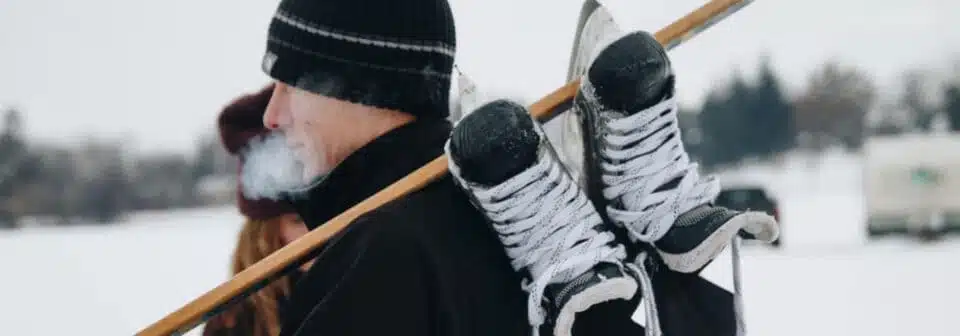
Hockey is Canada’s number one sport and has been enjoyed worldwide for over a century!
Not only is hockey extremely fun to play, but it’s also an excellent form of cardiovascular exercise and vigorously works your lower body. Playing hockey increases your heart rate, which improves your body’s ability to build muscle and burn calories.
Hockey is also beneficial for your mental health. Getting vigorous amounts of exercise releases endorphins. This puts you in a better mood and gives you additional energy. Playing hockey can also keep your brain sharp; this is because it can help improve your problem solving and decision-making skills.
However, athletes should know that playing hockey comes with its fair share of risks. Hockey is one of the more aggressive sports; players can potentially experience concussions, lose teeth and break bones.
Hockey players are also prone to several foot and ankle related injuries. Below, we break down the most common foot and ankle injuries that hockey players can experience:
Common Hockey Injuries
- Skate or Lace Bite – One of the most common hockey injuries is known as lace bite (also occasionally referred to as skate bite), which occurs when you tie your laces too tight. Lace bite causes players to experience, ankle pain, redness and swelling
- Metatarsalgia or toe capsulitis – Caused by repetitive stress during push off
- Subungal hematomas (black toenails) and onycholysis (toes lifting) – Caused by the toes hitting the front of the skates.
- Ingrown toenails – From tight boots and push off forces
- Hallux limitus or rigidus – Caused by limited big toe movement in skates and more pressure with side strides
- Lisfranc stress injuries (midfoot) – From forceful lateral push offs
- Plantar fasciitis – Players with flat feet or limited ankle dorsiflexion are especially prone to this condition
- Anterior ankle impingement – Due to pressure around the front of the ankle and limited ankle dorsiflexion
- Achilles tendinopathy – From repetitive forceful plantarflexion
- Posterior ankle impingement – Occurs when the back of the ankle becomes painful, often in hockey players who skate with a forward-leaning stance. This injury is typically caused by repetitive pressure or pinching at the back of the ankle, leading to discomfort and stiffness during skating.
- Peroneal tendinopathy – From edge glides and lateral loads on the ankle and foot
- Posterior tibialis tendinopathy – From continuous overpronation and subluxation of the navicular bone
- Retrocalcaneal bursitis – Inflammation of the bursa located at the back of the heel, often caused by rubbing or pressure from the heel counter of a skate or shoe. This irritation can lead to pain along the back of the heel and on the sides of the Achilles tendon, making skating or walking uncomfortable.
- Haglund’s deformity – A bony enlargement at the back of the heel that can develop from repeated rubbing and pressure from the heel counter of skates or shoes. This irritation causes pain along the back of the heel and may lead to the formation of a bony spur over time.
- Sever’s disease – A common heel condition in children aged 8–14, caused by stress on the growth plate at the back of the heel. It leads to pain and swelling, which often worsens during and after skating or other physical activity.
Hockey Safety Tips
We know that a few potential injuries won’t stop hockey players from doing what they love; that’s why we put together this list of safety tips.
Always Wear a Helmet
Practically every hockey league (both professional and recreational) require players to wear a helmet. This requirement, which was put in place in 1979, is essential for several reasons.
As mentioned earlier, hockey players are prone to head injuries, like concussions. Studies show that concussions account for approximately 2% to 14% of all hockey injuries. Additionally, concussions account for about 15% to 30% of all hockey-related head trauma.
Although concussions are occasionally unavoidable, wearing a high-quality helmet can drastically decrease your risk of experiencing head trauma.
So, why are modern helmets so effective? First of all, modern hockey helmets are made out of high-quality materials like vinyl nitrile and expanded polypropylene foam. These materials are made to disperse and absorb large amounts of impact.
Additionally, modern hockey helmets are form-fitting; they are designed to cup and protect the orbital protuberance (the back of your head).
Are you looking to protect more than just your head? Then you may want to consider buying a helmet with a visor and/or ear guards. These helmets are made to protect the remainder of your face from stray pucks, sticks and skates.
Wear Skates That Have the Right “Fit”
Having the right pair of skates is integral, especially if you want to perform at the best of your ability.
Are you new to the sport? Then you may not know that buying a pair of skates is quite different from picking out a pair of shoes.
Here are several key differences that you need to keep in mind:
- Size: The first thing you need to consider is the size. While looking for new skates, you need to remember that hockey skates have a different sizing system than traditional walking shoes. You should generally look for hockey skates that are one to one and a half sizes smaller than your everyday footwear. Are you buying skates for your child? Then you may want to get a pair that has a little bit of wiggle room. This way, if your child has a growth spurt, you won’t have to replace their skates instantly.
- Tightness: While playing hockey, athletes want their ankles to feel stable and secure. Wearing loose-fitting skates strains your ankles and can increase the risk of sprained or broken bones. Before hitting the ice, make sure that neither of your laces are untied. This will not only help you feel secure, but it will also lower the chances of you accidentally tripping. For extra security, you may want to wear a pair of thick socks. This will help keep your feet warm and fill in any additional space in the skates.
- Heel Movement: Can you lift or shift your heels in your current pair of skates? When your skates fit properly, you shouldn’t be able to move your heels at all. Instead, they should feel snug and continuously in one position. Wearing skates that don’t fit properly can cause your heels to shift in place. This can make your skin feel rough and potentially lead to painful blisters on the sides of your feet.
Stay Hydrated
During the sweltering summer heat, athletes are constantly reminded to drink as much water as possible — however, if you’re playing sports in the winter, like hockey, you still need to drink a sufficient amount of fluids.
Drinking water is incredibly beneficial for athletes, as staying hydrated can:
- Improve your joint and muscle health
- Regulate your body temperature
- Prevent and lessen the severity of muscle cramps
Failing to drink enough water can lead to dehydration; this happens when your body uses more fluids than it’s receiving. When this happens, your body slowly begins to shut down, and in some severe cases, dehydration can lead to short-term hospitalization.
It can be challenging to pinpoint exactly when you (or one of your teammates) are feeling dehydrated, as other common issues share many of the symptoms.
If you don’t know what to look for, then keep an eye out for the following signs:
- Dizzy/light-headed feeling
- Dry mouth
- Upset stomach
- Elevated heart rate
To be safe, you should aim to drink at least 8 oz of water before playing. During the game, you should try to consume anywhere from 7 oz to 10 oz. Finally, you should have no less than 8 oz of water after the game is finished. This may seem like a lot of fluid, but your body will appreciate it.
Wear Compression Stockings
These garments are designed to apply therapeutic pressure to your feet and ankles.
Wearing compression stockings can help improve the circulation in your lower body and decreases fluid retention. Fluid retention (also referred to as water retention and edema) generally stems from prolonged periods of sitting and/or standing. This condition causes extremities, likes your feet, to swell up and feel uncomfortable.
Additionally, compression stockings are a cost-effective tool for reducing and managing blood clots. After experiencing a blood clot, some patients are advised to wear compression stockings for as long as two years.
So, why are compression stockings so vital for hockey players? In short, compression stockings can improve your athletic performance. This is because compression stockings can:
- Increase your endurance
- Minimize muscle strain
- Improve your balance and stability
- Lower the risk of shins splits and other forms of soft tissue damage
Additionally, if you wear compression stockings while doing your daily feet exercises, you can drastically decrease your recovery time (for lower-body injuries) — this means you can spend less time on the couch and more time on the ice.
If you’re a female hockey player, you most likely want something that fits your body. That’s why many companies produce compression stockings for women as well as men. This makes them an accessible tool for both genders.
With all of this in mind, it’s clear why athletes should always wear a pair of compression stockings underneath their uniforms.
Wear Supportive Insoles
Hockey skates often restrict the natural movement and flexibility of the foot and typically don’t provide enough support, which can make players more prone to the injuries discussed above. One way to reduce this risk is by wearing supportive insoles designed specifically for skates. Many players opt for custom orthotics to get personalized support that helps prevent and manage foot pain. You can get custom orthotics specifically constructed and designed for your favourite hockey skates. Over-the-counter hockey insoles can also provide added cushioning and stability. Some brands even make insoles specifically tailored for the unique fit of hockey skates.