Open
Open


March 19, 2026
Corns can be painful, annoying, and make walking uncomfortable, but the good news is that corn removal doesn’t have to be complicated. Whether you’ve tried pads, creams, or home remedies without success, professional corn removal can provide lasting relief.
What Are Corns?
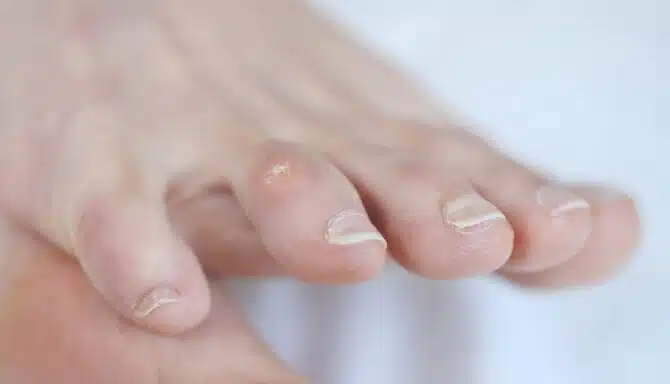
Corns are small, hardened areas of skin that usually develop on your toes or the soles of your feet due to friction and pressure. Unlike calluses, corns are often painful, especially when pressing on a toe joint or the sole of your foot.
They can form from:
Wearing tight or ill-fitting shoes
Toe deformities like hammertoes or bunions
Repetitive pressure or friction during activity
While conservative care like padding, orthotics, or topical treatments can help, stubborn corns may require a more permanent solution. That’s where surgical removal using a biopsy punch comes in.
Can Corns Be Surgically Removed?
Yes! Corns can be safely removed in a clinical setting. The procedure we use is called a biopsy punch removal.
Unlike traditional surgical excisions, the biopsy punch is:
Minimally invasive – only a small circular section of the corn is removed
Precise – targets the corn without damaging surrounding healthy tissue
Quick – typically performed in-office under local anesthesia
This technique not only removes the hardened core of the corn but also reduces the chance of recurrence when combined with advice on footwear and foot mechanics.
How the Biopsy Punch Procedure Works
AssessmentYour chiropodist first examines your foot to determine the size, location, and depth of the corn. This ensures the treatment is safe and effective.
Local AnestheticA small amount of local anesthetic is applied to numb the area. The procedure is usually painless thanks to this step.
Punch RemovalA small circular blade, called a biopsy punch, is carefully pressed into the corn to remove the core of thickened skin. This relieves pressure immediately and reduces pain.
AftercareAfter removal, your chiropodist may apply a protective dressing and provide instructions to:
Keep the area clean and dry
Avoid tight shoes for a few days
Use padding or orthotics if necessary to prevent recurrence
Benefits of the Biopsy Punch Procedure
Immediate pain relief – removes the pressure point causing discomfort
Minimally invasive – less tissue trauma compared to traditional surgery
Quick recovery – most patients return to normal activities within a few days
Reduced recurrence – proper technique combined with foot care advice minimizes future corns
Who Can Benefit from Biopsy Punch Corn Removal?
People with painful corns interfering with walking or daily activities
Individuals who haven’t responded to conservative treatments like pads, creams, or orthotics
Patients with recurring corns that cause repeated discomfort
It’s a safe procedure for most adults, but your chiropodist will review your medical history to ensure it’s appropriate for you.
Preventing Corns After Removal
Even after removal, corns can return if friction and pressure aren’t addressed. Your chiropodist may recommend:
Wearing properly fitted shoes
Using toe spacers, pads, or orthotics to redistribute pressure
Maintaining good foot hygiene and regularly checking for signs of friction
Bottom Line
Corns don’t have to be a painful, recurring problem. The biopsy punch procedure offers a minimally invasive, safe, and effective way to remove corns, relieve pain, and improve your foot health.
April 6, 2023
Corns and calluses on the surface of your feet can be a warning to pay better attention to your foot health. Both conditions are caused by your body protecting your feet from friction or pressure. Likewise, the same treatment and prevention methods help both pesky skin problems.
Today's blog will discuss the preventative measures you can take to ward off calluses and corns and the treatments a chiropodist or podiatrist can perform.
Corns vs. Calluses
The causes of calluses and corns are similar, but it's important to note a few key points.
The term "corn" derives from their appearance as round, hardened skin resembling a piece of corn. Calluses encompass a large, rough and thick area of the foot.
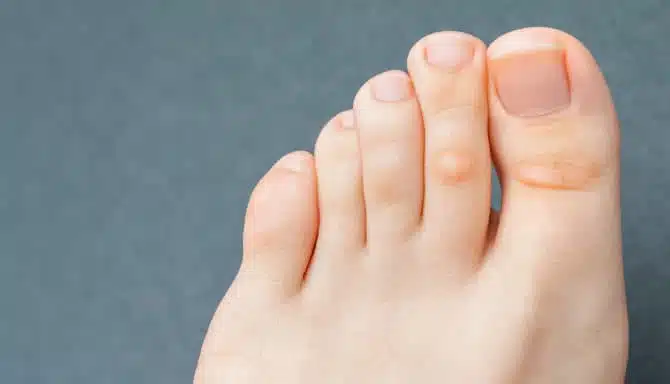
Corns usually appear on the top or side of the toe. Calluses can spring up anywhere on the foot that bears weight, like the heel, big toe, ball of the foot and side of the foot.
Both conditions are not usually painful but may feel tender if you continuously walk on them. Corns may feel slightly more painful since they're a more concentrated area.
To read more about calluses and how they form, click here.
To read more about corns and how they form, click here.
How to Prevent Corns and Calluses
Prevention of calluses and corns starts with the footwear you choose. Shoes with too much or too little overall room can be a risk factor: When shoes fit loosely, the foot slides forward excessively, creating friction and leading to corn and callus development. When shoes are too tight, consistent pressure will lead to the same result as loose-fitting shoes. That's why it's essential to look for shoes that properly fit your feet and leave enough room in the toe box (especially important for corns).
Sometimes, biomechanical issues can make a person especially vulnerable to corns and calluses. In these cases, custom orthotics may be helpful as they correct any biomechanical abnormalities that can be causing excess friction and pressure on parts of the foot. Further, they add an extra layer of defence between your foot and friction via the arch support they provide. Orthotics also help manage hammertoes, a pre-existing risk factor for corns.
Treatment Options for Corns and Calluses
In general, non-painful calluses and corns can go away independently with footwear modifications. But there are occasions when chiropody and podiatry services must enter the picture. For instance, if you notice inflammation, redness and intense pain in the affected area, you should seek treatment. It is extremely important to never attempt to remove a callus or corn from home!
Furthermore, those with diabetes should ensure a chiropodist or podiatrist regularly tends to their corns and calluses because diabetes prevents them from healing properly. In addition, diabetic neuropathy can prevent the patient from noticing if corns and calluses are getting worse and entering ulcer territory.
Chiropodists can remove thick calluses during a medical pedicure. This is also a preventative treatment as the entire treatment process strengthens the skin's protective barrier. Chiropodists can also shave down corns and calluses with sterilized tools before applying the right creams or ointments to ensure skin repair. In addition, they can recommend medical-grade products like corn foot pads and foot devices to reduce friction.
November 9, 2021
Do you have pain on the top of your foot accompanied by a small, hard lump? Or perhaps you notice the same feeling on or in between your toes, but the lump is softer? You think to yourself it could be a plantar wart or a foot callus, or perhaps a foot condition you never even heard of before. In fact, there is another condition that may be the culprit: foot corns.
Corns are little nuisances that have some similarities to calluses and warts. They are generally caused by friction, pressure and your shoes rubbing against vulnerable areas of your feet. Corns are typically painful and, depending on the type, hard or rubbery. Let's learn as much as we can about corns, including what causes them, the different types of corns, and how to treat them!
What Are Corns?
A corn is an area of round and painful skin with a thick hardened centre (called the "core") and an inflamed surrounding area. They may feel hard, rubbery or soft, depending on the type. Their small, circular appearance and hardened feel resemble pieces of corn, hence the name. That said, the medical term for a foot corn is a heloma, or a "focal intractable plantar hyperkeratosis," according to the National Center for Biotechnology Information.
Corns tend to affect areas of the foot with thinner skin, differing from many other foot conditions that affect the areas of the foot that bear the most weight. Since a corn is technically a callosity, many people may confuse one with a callus.
What Is The Difference Between a Foot Corn And a Foot Callus?
General knowledge about corns is always useful, especially if you suspect you have one. One thing to note is the main differences between a foot corn and the slightly similar foot callus. Mayo Clinic notes the following key differences between the two:
Corns are smaller and have a defined hardened centre.
Corns can be painful, while calluses generally are not.
The shape of calluses can vary, and they are more "spread out." Corns are always a rounder shape.
Types of Corns
There are three types of corns: hard corns, soft corns and seed corns.
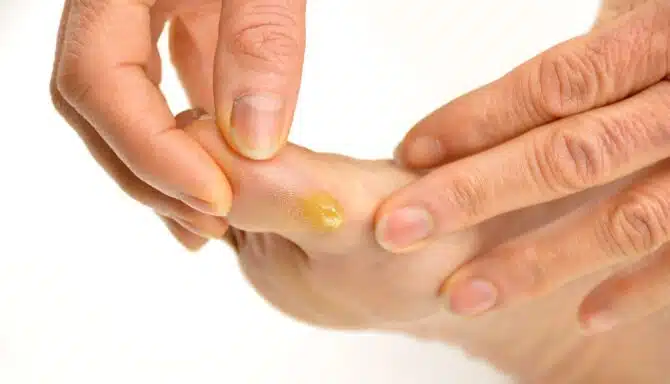
Hard corns are - as you may have guessed - harder and thicker than the other types. Hard corns are generally what first comes to mind when we think of foot corns, and have the yellowish/beige colour you might expect from a corn. Hard corns form on the top or side of the toes, which are both areas with more bone pressure against the skin. A large area of thick skin usually surrounds a hard corn.
Soft corns are more "squishy" than hard corns and have a whiteish/grey tint. These corns are commonly found between the toes and have a rubbery texture. According to HealthLink BC, soft corns may form when "sweat is trapped where the corn develops." Because they are softer, one may confuse a soft corn with a blister. However, they are very different: Blisters are filled with fluid, whereas soft corns are not.
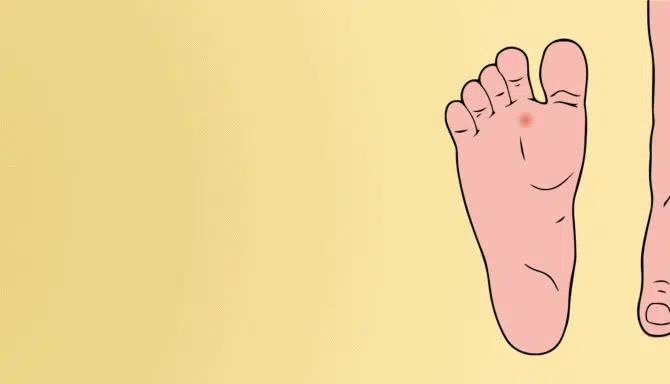
Lastly, there are seed corns. Seed corns are tiny and located on the bottom of the foot, often on the soles. It's important not to confuse a seed corn with a plantar wart. One way to tell the difference between a corn and a wart is by noting any size changes. Seed corns typically remain tiny, while plantar warts can become larger. Furthermore, plantar warts sometimes have black or brown dots inside them, or "wart seeds."
What Causes Corns?
Like calluses, the main offenders behind corns are friction and pressure. That is why they tend to develop in areas on the foot that are vulnerable to friction and pressure. Hard corns develop when friction and pressure damages the outer layer of the skin. The body tries to protect the area beneath the damaged skin by forming a hard surface. Numerous factors can contribute to the development of foot corns. These include:
Wearing shoes that are ill-fitting and frequently rub against your feet. Examples include tight running shoes and high heels. Specifically, shoes that are too narrow can cause friction against areas that are more vulnerable to foot corns. This includes the top of your feet and the top and side of your toes.
Wearing shoes without socks. This leads to excessive friction between your skin and your shoes. High-quality socks can protect your feet from excessive friction.
Having a pre-existing foot condition that alters the normal alignment of the bones in your feet, such as hammertoes or bunions.
Spending too much time barefoot.
Your gait may contribute to corn development if you place excessive pressure on the edges of your feet when you walk.
Playing sports without proper footwear.
Wearing ill-fitting or non-protective socks.
How Can You Prevent And Treat Corns?
Luckily, foot corns are very easy to treat. Sometimes they may go away on their own, but if your corn is disruptive and causing you pain, a visit with a Toronto foot specialist should clear the problem right up. Chiropodists can safely remove corns by shaving them down with sterilized tools (do not try this at home!). A chiropodist can also ensure aftercare by applying moisturizer and ointment to the affected area. The treatment is painless and should provide immediate relief. Corns can come back, so follow-up treatments may sometimes be needed.
To help prevent your corns from coming back - or prevent them altogether - we strongly recommend ditching shoes that are too narrow or constricting. In order to reduce friction, all your shoes should provide enough room in the toe box and accommodate your foot width. This will also help you recover faster from the corns you currently have. The knowledgeable staff at Feet First Clinic can help you find quality shoes that fit properly so your feet won't be plagued by corns - a service that sets Feet First Clinic apart from the rest! Be sure to check out our footwear product catalogue for ideas for your next pair of comfy shoes!
Other treatment and prevention options include toe protection products, which pad the parts of your foot most vulnerable to corns. A good foot care regime will also go a long way towards preventing corns, as well as calluses and many other common foot conditions: Soaking your feet in warm water and using a foot file helps remove excess dead skin, while moisturizing daily helps strengthen the resiliency of the skin on your feet.
February 14, 2020
Callus or Corn?
Hyperkeratosis is a thickening of the skin and can form on areas, usually over boney areas that are prone to repetitive pressure or friction. Callus, however, is a type of hyperkeratotic lesion that occurs over a larger area and is generally not painful. Callus is generally uniform in thickness and common areas include around the nail, the ball of the foot and the back of the heel.
Corn is the common term for heloma durum, a well demarcated hyperkeratotic lesion that occurs in a localized spot with a central core that pushes deeper into the skin and can cause pain and inflammation.
The term corn is derived from the name of the epidermal outer layer, the stratum corneum. The stratum corneum can be thickened with constant abnormal pressure causing either helomas (“corns”) or callus.
Corns, or helomas, as referred to by chiropodists and podiatrists, are well demarcated lesions with a central keratin core, which can appear more yellow or translucent in appearance. They usually have surrounding callus.
Hard vs Soft Corns
Hard corns or heloma durum are, as the name implies, hard hyperkeratotic lesions that are well circumscribed and have a central core. They are usually found on the tops of toes or on the ball of the foot.
Soft corns are found between toes and with excess moisture, become a macerated lesion that can be painful. They are most commonly between the 4th and 5th toes. They are caused when the toes are moving against each other, either through toe deformity or an ill-fitting shoe, or both.
Both types are not serious health concerns and can be conservatively managed through sharp reduction from your foot specialist as well as proper padding or insoles and properly fitted footwear. Other factors including smoking and moisture control can also be considered.
Will it go Away?
Corns, also known as Heloma durum, “go away” with physical treatment. A foot specialist can remove corns via sharp blade. However, true removal and prevention involves diagnosing the cause of corn development.
Why do I have it?
The main cause of heloma durum, otherwise known as corns, is abnormal mechanical stresses, which can be intrinsic or extrinsic. Intrinsic risks include boney prominences, poor healing of old injuries, or faulty biomechanics including rigid joints and hammertoes. Extrinsic causes include ill fitting footwear, improper footwear to the foot type (e.g. high heels), or high level of activity (e.g. stair climbing, martial arts.)
What are the Risks?
Risks include systemic disease like diabetes, rheumatoid arthritis, stroke, or neurovascular disorders like cerebral palsy or Charcot-marie-tooth disease. Family history of foot deformity like hammertoes or bunions can predispose a person to callus and corns. Smoking can also increase formation of corns as vascularity to the feet is decreased.
Corns can be dangerous if left untreated. Specifically, heloma durum pushes against the dermis layer of skin and can create an ulcer if left untreated. This is especially risky for persons with immune disorders or diabetes.
While corns are not cancerous, there may be some lesions that look like corns that can be or become malignant, and is best to contact your physician or book an appointment with us for an assessment.
Corns generally do not spread. If you find corns are increasing in number it’s best to come in for an assessment, as they may be a different lesion that can mimic corns, like warts.
A question to ask is how long have you noticed the lesion? ---Corns are usually long standing and gradually developing. Warts are usually new and generally on one foot.
Corns can have different types. The common corn type, heloma durum, is treated with sharp reduction. A blade is used to remove the core keratin plug. Since this plug has no blood vessels or nerve endings, reduction should be little to no pain.
For more aggressive or painful corns, like neurovascular heloma, they may be treated with topical treatments or with topical anesthetic before sharp reduction.
Can I Treat it at Home?
Due to the localized nature of corns, it is not recommended to self remove heloma durum. Foot specialists are highly trained to safely and evenly reduce callus and corns.
There are low acid concentrated solutions that are over the counter that can soften the keratin plug of corns. The topical is applied to the central core of the corn and when the core is soft enough, it can be easily removed.
Proper diagnosis of any foot lesions is vital to treatment. Physicians or specialists will be better trained to evaluate any foot lesions. Foot specialists can also provide treatment.
Shoes with deeper and wider toe boxes and soft insoles may reduce pressures that can develop corns. Look for shoes with laces as they can prevent excess movement of the foot inside the shoe.
Dry skin may reduce elasticity to the skin which can increase corn and callus formation.
Any foot condition that cause abnormal mechanical stresses or foot deformity may increase risk of developing corns. For example, hammertoe deformity may increase pressures at the ball of the foot and at the tip of the toe, which can lead to callus or corn formation. Excess perspiration can cause corns that are between the toes to absorb more moisture leading to painful soft corns (heloma molle).
What Happens After?
Following corn removal, there may be a small depression where the keratin plug once was. Treating the cause is most important to completely prevent reformation of corns. The area will look flat without pain for many months.
Corns may return if mechanical stresses exist, and thus can return dependent on intrinsic and extrinsic factors.
Treating the cause is the best way to prevent formation of corns. A foot assessment is the recommended route to determine the cause of corns. For example, if corns are caused by external pressures, the pressure source should be identified and removed. If the cause is more intrinsic, e.g. foot deformity, then offloading devices can be made to prevent corn formation.