Open
Open


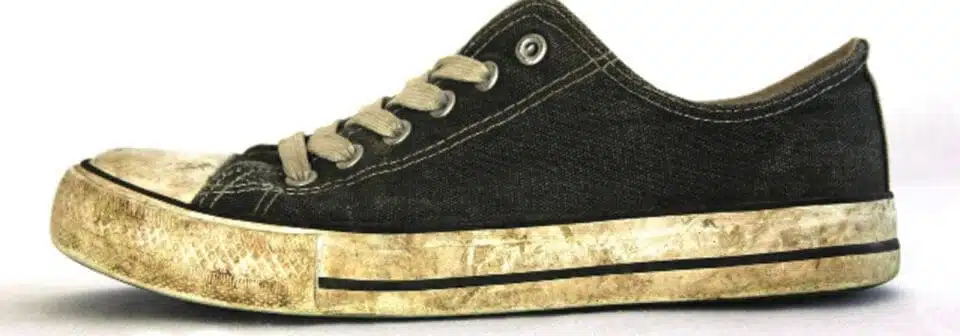
It’s common knowledge that you stop growing after you reach a certain age. This would lead one to believe that their footwear will fit forever. Sadly, this is wishful thinking. Over time, your shoes are prone to stretching and shrinking.
As an example, if you wear the same pair of shoes every time you work out, they will gradually lose their shape and eventually feel looser. Additionally, people in hot climates have reported that their shoes are shrinking from over-exposure to the sun.
Before you throw on your running shoes, make sure you keep an eye out for the following signs:
You Can’t Slide Your Shoes Off Easily
In some sports, like hockey, players are encouraged to tie their laces as tightly as possible. Tightly tied skates can prevent issues like rolled and sprained ankles.
However, this isn’t necessarily the case with running shoes. If your footwear is the ideal size, you should be able to slide them on and off without undoing the laces.
If you can’t do this, you’re either tightening your laces too much or wearing ill-fitting footwear.
Your Toes Touch the Inside of Your Sneaker

Are your feet swollen and sore after a long day of work? This may be because your toes are touching the inside layer of your sneakers. If so, then your shoes are too short.
If your toes rub against the inside of your sneakers, you can potentially bruise your nails, get blisters or a hammertoe.
To ensure that your shoes aren’t too tight, it’s recommended to have approximately a finger’s width of space between your longest toe and the inside layer of your sneakers. While for most people, this would be the big toe, it isn’t the case for all. About 40% of the population has a Morton’s toe, meaning that their second toe is the longest toe. For these people, you would want to ensure you have a finger’s width of space between the end of your second and the inside layer of the shoe.
This measurement is approximate – not universal. The ultimate test: if you feel your toes knocking against the inside of your shoe, they’re too short.
You also want to make sure you don’t feel any pressure or squeezing on the pinky toe either. If so, your shoes could be too narrow.
You Have Corns, Calluses or Blisters
Having corns, calluses or blisters can be another tell-tale sign that your shoes don’t fit properly. When toes repetitively impact against the inside of the shoes, it causes friction to build up. In response, the skin forms a blister, corn or callus. Some examples:
- a callus on the outside of your big toe or pinky toe can be a sign your shoes are too narrow
- Red marks or corns on the top of your toes can be a sign that the toebox in your shoes is too shallow
- Blisters on your heels are a sign that your shoes don’t fit properly in the back
Your Heel Moves Around While Walking
If your heel is slipping or moving when you walk, it’s a telltale sign that your shoes are too big. So often we’re paying so much attention to our shoes not being too small, that we don’t worry about them being too big. However, shoes that are too big can be just as harmful as shoes that are too small.
If your shoes are too loose, your heel has more room to move around and rub up against your footwear. This causes additional friction, which can be extremely uncomfortable and lead to blisters. Wearing shoes that are too loose can cause tight calves, which can lead to calf pain and plantar fasciitis.
Does this happen to you? The simplest way is to deal with this issue is by tying your shoelaces correctly.
You can also try attaching an adhesive heel grip to the back of your shoes; this will secure your heel snuggly in place, and can be especially helpful for the slippage commonly experienced with dress shoes.
If your heel is still slipping, then you may need to purchase shoes that are half a size smaller.
So, before you slide on the shoes that you’ve had for far too long, you should take a look for the signs mentioned above. This will ensure that you don’t harm your feet in the (not so distant) future.