July 30, 2026
It's all in the toes.
Our toes bear the weight of the body with every step and are the foundation for our movement. The big toe specifically is the final point of contact before each step. In fact, the big toe carries most of the body weight, bearing about 40-60% of the load. The big toe also provides about 80% of the foot's total stability.
As a result, many foot injuries and toe conditions stem from, or affect, the big toe.
Maintaining good toe health is crucial for the longevity and long-term health of your feet. There are a number of different foot conditions that can result from toe neglect. Stiff toes, for example, can lead to hallux limitus or hallux rigidus.
Below you'll find a list of common toe conditions.
Claw Toe
A Claw Toe has an abnormal bend in both the middle joint and the joint closest to the tip of the toe.
Symptoms of claw toe include an upward extension from the joints at the ball of the foot and downward flexion at the middle joints toward the sole of your shoe. Claw toe comes in the shape of a bridge or a hump.
Early on, claw toe resembles a flexible hammertoe (see more below). However, over time, claw toes can stiffen. It's important to address claw toe early to reverse the deformity. One such treatment is a splint or tape to hold your toes in the correct position. You can also try a silicone toe crutch.
Finding shoes that fit correctly is also a key preventative measure. You'll notice through this article that many toe conditions can be prevented by wearing Proper Footwear. Additionally, you can use your hands to stretch and straighten your toes, and perform exercises including picking up marbles or a towel to strengthen local ligaments and tendons.
Subungual Hematoma
A subungual hematoma is a medical term for a Black Toenail.
A black toenail occurs when the skin below the nail is damaged. Long-distance runners are particularly susceptible to black toenails because of the friction to the top of the foot, as well as the duration of the activity.
Immediately after injuring your toe, you need to reduce the pain and swelling. First, wrap a clean bandage around the toe to stem the blood. Put a bag of ice or cold compress on the covered injury - ideally putting a plastic cover above the band-aid to prevent it from getting wet. Then lie down and elevate you foot so it is resting above your heart, to again stem the blood flow. Finally, avoid doing any strenuous activity for the next 3-5 days and avoid wearing shoes that touch the affected area. It is ideal to do Epsom foot soaks every day and change the band-aid daily for the next 3-5 days. If bleeding does not stop after 5 days, contact your chiropodist or podiatrist. If the nail is lifting and causing pain, see your chiropodist to have it gently cut back and to prevent further injury.
Turf Toe
Turf toe is a sprain of the big toe joint resulting from injury during sports activities.
This acute injury typically occurs from jamming the toe. Turf toe includes pain, swelling and limited joint movement. Following the PEACE & LOVE protocol is beneficial. In the first 1-3 days follow PEACE: Protect, Elevate, Avoid anti-inflammatories, Compress and Educate. After the acute phase, promote healing with LOVE: Load (gentle movements), Optimism back to activity, Vascularisation (cardio) and Exercise. Additionally, wear stiff or rocker bottom footwear to limit flexion of the toe and to keep it isolated and neutral while walking. Taping the toe with semi-flexible sports tape can also aid in keeping the toe at a neutral angle while its healing.
The biggest concern here is either not addressing the injury, or rushing back to activity too quickly. Without the proper treatment, turf toe can turn into hallux limitus.
Hallux Rigidus
Osteophyte (bone spur) on top of the left first metatarsophalangeal joint (MTPJ) due to hallux rigidus.
Translated to a stiff big toe, hallux rigidus is a progressive condition that stems from osteoarthritis in the big toe. It causes pain and stiffness in the joint and over time, the toe loses flexibility.
As the cartilage at the first metatarsophalangeal joint (MTP) breaks down, the metatarsal bones and the proximal bones rub together. This friction, as well as the body's response to fill the void left by osteoarthritis results in the formation of a bone spur.
In this case, its important to recognize early signs of Hallux rigidus which is Hallux limitus. During the hallux limitus stage, it is crucial to improve and maintain the range of motion in the toes to prevent it from progressing. This may include investing in a pair of custom made orthotics or proper fitting footwear.
Hammertoe
Hammertoe is a progressive toe condition that worsens if left untreated. In short, hammertoe is a toe deformity of one or both joints of the second, third, fourth or fifth (little) toes. You'll see one of the toes shift and cross over another toe.
Hammertoe can develop from wearing ill-fitting shoes, especially footwear that is too small or has a tight toe box. The lack of space forces the toes into a bent position, which can eventually cause changes in the tendons and ligaments. Hammertoes can also occur alongside a bunion, as the smaller toes may overcompensate for changes in foot mechanics. Fortunately, addressing the cause quickly can be extremely effective.
Treatment includes:
Corn pads
Stretching and strengthening your toe and toe and foot muscles
Roomier footwear
Custom orthotics that help reposition and take the pressure off of your toes
Surgery
Metatarsal pads
Left untreated, hammertoe can worsen and require surgery. If your toes appear bent or you are experiencing toe mobility, visit one of our licensed chiropodists (foot specialists) as soon as it's safe to do so.
Drop-in shoe fitting for hammertoe is also offered.
Gout
Gout is a common and complex form of arthritis that often begins in the big toe.
It's often known as the "disease of kings" or "rich man's disease" because it's prevalent in older men, as well as those who eat meat or seafood, drink beer, or are overweight.
It's characterized by sudden, severe attacks of pain, swelling, redness and tenderness in the joints. Gout looks like a swollen bunion on the outside of the big toe. Gout can have symptoms similar to conditions such as Hallux Limitus, Hallux Rigidus, or an inflamed Bunion. However, a key difference is that gout pain often worsens at night and can be extremely sensitive to light pressure, such as bedsheets touching the area. In contrast, hallux limitus, hallux rigidus, or bunions typically cause pain with joint movement or when wearing certain footwear. A definitive diagnosis of gout usually requires medical testing, such as bloodwork, joint aspiration, or imaging like X-rays or CT scans.
To help prevent gout, you can follow these preventative measures:
Drink plenty of fluids
Limit or avoid alcohol
Get your protein from low-fat dairy products
Limit your intake of meat, fish and poultry
Maintain desirable body weight
Ingrown Toenails
An Ingrown Toenail occurs when the side of the toenail curls down and pierces the flesh of the toe as the nail grows. Untreated ingrown toenails can easily become infected.
To start, you’ll want to focus on treatment, and then prevention.
Place a spacer or splint under the ingrown edge of the toenail
Soak feet in Epsom salt and water bath at home to flush out the infection and manage pain and inflammation
Trim the ingrown portion of the nail
In recurring cases, surgical removal (outpatient) of part of your toenail
If your toenail becomes infected you may need topical or oral antibiotics
Prevention includes:
Avoid shoes that crowd your toes
Trim your toenails straight across and file the corners
Avoid injury to your toenails
Sometimes improper foot mechanics or tight footwear can cause excessive callus buildup between the skin and the nail. This buildup can become inflamed and painful, often feeling similar to an ingrown nail even though the nail itself is not growing into the skin.
Blisters
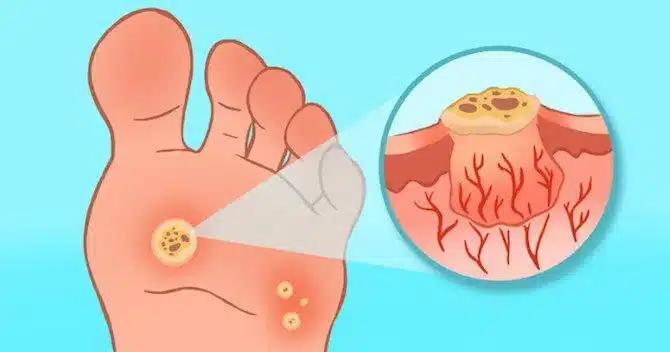
Blisters are among the most common toe conditions. Although common, blisters typically are not serious and can be treated immediately for relief within a few days. Blisters are small, fluid-filled bubbles on the upper most layer of the skin. Friction against your skin and your socks and shoes causes your skin to form small bubbles to prevent further damage to the underlying skin. More serious blisters may contain blood as the vessels at the surface of your skin burst.
These skin conditions typically heal themselves within a few days. However, it’s advised to cover blisters either with a basic bandage, tape, or a Band-aid, all of which are available at our Toronto foot clinic. These measures are simply to prevent unwanted popping of the blister and to shield your skin from friction.
To schedule best foot care treatment with our licensed Chiropodists (foot specialists), use the booking form at the bottom of this page or call 416-769-FEET(3338).
Bunions
A Bunion is a deformity of the metatarsophalangeal (MTP) joint. A bony bump protrudes from the base of the big toe causing pain, redness, and sometimes even swelling. Bunions are atop the list of most common toe problems. It affects about 23% of adults. The common age range of onset is 20-50, and women are more commonly affected than men.
Like hallux rigidus and other progressive foot conditions, a bunion is irreversible once it starts. So you can’t reverse what’s already been down, but you can take measures to slow down the deformity over time. The sooner you address the problem, the slower the rate of bunion growth.
Do you have a bunion or hallux rigidus? Read: Hallux Rigidus or Bunions: What's the Difference?
Measures to help slow a bunion’s progression include:
Proper Footwear
A foot assessment for Custom Orthotics
Over-the-counter footcare products
Surgery is also an option. Typically, surgery includes removing the protruding portion of the bone, and re-aligning the joints in the big toe. Surgery is considered a last-resort option for advanced bunions that cause significant pain and have not improved with conservative treatments. Like with any foot condition, educate yourself on the pros and cons of surgery to determine: Is Foot Surgery Worth It? But, there’s still hope for those with bunions. Check out these Effective Ways That you Can Treat Your Bunion Pain.
A bunion’s sibling: A bunionette
Similarly, a Bunionette (or tailor’s bunion) is a bunion on the opposite side of the foot. A bunionette appears on the pinkie toe and affects the fifth metatarsal. It’s smaller than a bunion, but still appears as a bump. Pain associated with a bunionette occurs on the outside of the foot, and tight shoes may exacerbate the condition. Shoes with narrow toe boxes are particularly problematic for those with a bunionette. Narrow toe boxes increase friction against the bony protrusion. The causes of a bunionette are classified as either intrinsic or extrinsic.
Bunionettes can appear more pronounced after pregnancy due to the hormone relaxin and increased weight gain, which can cause the foot to flatten. This is why many women notice their feet feel larger or wider postpartum.
Causes include:
External pressure on the forefoot
Tight shoes
Genetics
Foot anatomy
Faulty mechanics
Bunion and bunionette treatment is similar. As such, properly-fitting shoes are an essential step. Additionally, stretching your shoe can provide benefits as it artificially provides additional toe room. This allows your bunionette more space in the shoe.
Remember, our bodies begin at our feet. Take proper care through the various methods mentioned in this article to prevent toe conditions from occurring.
 Open
Open