Open
Open


August 29, 2024
Plantar fasciitis, a condition that impacts the heel of the foot, is very common but often misunderstood. If you've felt sharp stabbing pain in your heel when you take your first steps in the morning, you might know this condition firsthand. But what does plantar fasciitis mean, and how can you treat it? Let's explore the specifics to help you better understand plantar fasciitis causes and treatments.
What is plantar fasciitis?
Plantar fasciitis happens when the plantar fascia gets inflamed. This thick band of tissue stretches from your heel to your toes along the bottom of your foot. It helps support your foot's arch and handles the stress we put on our feet. When this band gets irritated or swollen, it can lead to pain and discomfort. You'll often feel this pain in your heel area. If plantar fasciitis persists long enough and the initial inflammation (acute phase) subsides, it can become chronic. The chronic phase is characterized by less inflammation and more by tissue degeneration over time.
Causes of plantar fasciitis
Plantar fasciitis is typically caused by overuse and activities that put too much stress on the feet, which ultimately strains the plantar fascia. Such activities include includes running long distances, standing for hours, or playing high-impact sports. Risk factors that can make you especially vulnerable to developing plantar fasciitis include:
Foot structure: Conditions such as flat feet or high arches can lead to unhealthy biomechanics (i.e.: overpronation), which can then can put extra stress on the plantar fascia when you walk.
Improper footwear: Wearing shoes that don't support or cushion your feet well can make you more likely to develop plantar fasciitis. High heels, old shoes, or flimsy footwear without adequate arch support can all contribute.
Getting older: Those aged 40-60 are more prone to plantar fasciitis, but it can happen to anyone at any age. It's one of many age-related changes to the feet we experience as we age.
Your job: Working a job where you have to stand or walk on hard floors for a long time can increase your chances of getting this condition. That's right! Even your career can influence your foot health.
Symptoms of plantar fasciitis
The telltale symptom of plantar fasciitis is heel pain. In addition, you may experience the following:
Quick-hitting pain: Pain is often most severe when you take your first steps in the morning, or after sitting for an extended period. This pain tends to decrease with continued activity but can return after rest.
Sharp pain: Plantar fasciitis-related pain is typically sharp and may be felt near the heel's underside.
Pain post-exercise: While activity may initially relieve the pain, it can worsen after exercise or at the end of the day.
Tenderness: Pressing on the area where the plantar fascia attaches to the heel bone may cause pain.
Treating plantar fasciitis
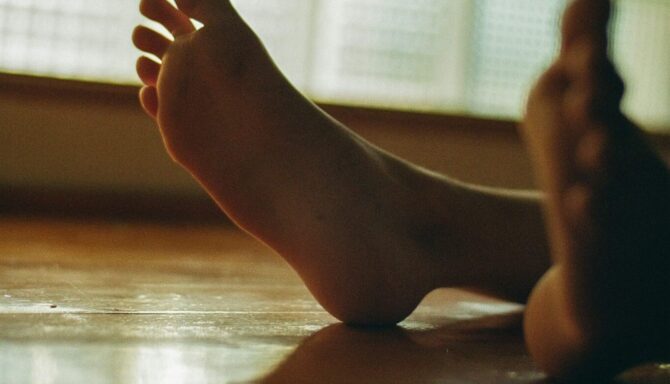
You may experience pain with plantar fasciitis first thing in the morning.
The good news is that most cases of plantar fasciitis can be managed with conservative treatments. Here are some effective strategies for treating plantar fasciitis:
Rest and ice: Resting and applying ice to the affected area can help reduce inflammation and pain. Aim to ice your heel for 15-20 minutes several times daily. You may also benefit from over-the-counter anti-inflammatories like ibuprofen or naproxen, which can reduce pain and inflammation.
Stretching exercises: Gentle stretching of the calf muscles, Achilles tendon, and plantar fascia can help alleviate tension and reduce pain. Exercises such as the calf stretch, towel stretch, and rolling the foot over a cold bottle or a tennis ball can be beneficial.
Footwear: Wear supportive shoes with good arch support and cushioning. Avoid walking barefoot on hard surfaces, and consider using custom orthotic inserts to provide additional support. Read our dedicated blog post on the best shoes for plantar fasciitis.
Night splints: Wearing night splints can help keep the plantar fascia stretched overnight, which may reduce morning pain.
Avoid high-impact sports and activities: Temporarily reducing or modifying activities that exacerbate your symptoms can help prevent further irritation of the plantar fascia.
September 6, 2019
Have you ever been walking around downtown Toronto with the feeling that you have a pebble stuck in your shoe? It can turn into a persistent nuisance that negatively impacts your daily exercise or routine. If this sounds like you, it is likely you are experiencing a nerve compression syndrome which affects the nerves located at the base of the toes, called a neuroma.
The most common nerve to be affected is the one found at the ball of the foot, between the third and fourth toes. This nerve is naturally thicker than the rest, putting it at higher risk of developing a neuroma. A neuroma at this specific location on the foot is called Morton’s Neuroma. Irritation of the nerve at this location causes the nerve to enlarge or swell, making it more vulnerable to compressive stresses.
What Are The Symptoms Of Morton's Neuroma?
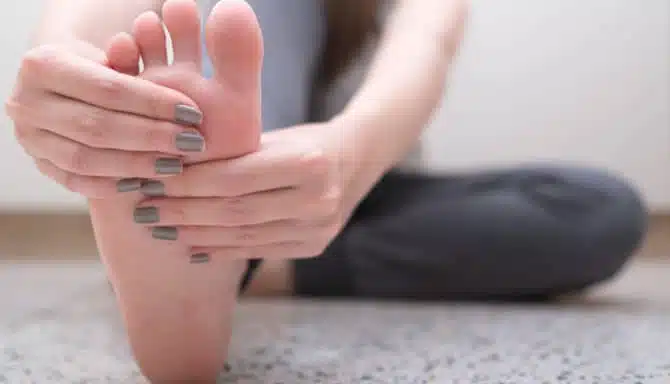
Localized pain that radiates to the toes when wearing shoes or while walking.
Feeling like you’re walking on a pebble.
Numbing, tingling, or burning sensation in your foot and feeling like you have to take off your shoes to rub it for relief.
Sharp pain in your foot.
Pain that radiates from the ball of your foot to your toes.
Photo by Artem Beliaikin from Pexels - Thank you!
What Causes Morton's Neuroma?
It is very likely that the cause of your neuroma is poor foot mechanics, with the most common one being overpronation. Overpronation is the involuntary act of rolling the ankles towards the arches as one walks. As the foot pronates more than it should, the metatarsals also move more than they should. This leads to compression and subsequent irritation of the nerves, resulting in pain and inflammation.
How Can I Treat Morton's Neuroma?
Your goals should be:
Remove pressures from the area of concern.
Allow the nerve to heal.
Prevent future incidences of discomfort.
In summary, an overhaul of your footwear will benefit you the most! To help you with this, you should make an appointment to see a qualified foot specialist. A Chiropodist may recommend a pair of Custom made orthotics which aim to correct poor foot mechanics and control pronation. Additionally, they will likely include such helpful features as a metatarsal dome pad, which aims to remove pressures from the nerves by splaying the metatarsal bones.
For more immediate relief, you can try over-the-counter metatarsal dome pads and add them to the insoles of your shoes. Lastly, wearing wider shoes with a wide toe box and a low heel will help to manage your pain and prevent exacerbation of symptoms. A proper Shoe fitting may be what you need!
Photo by Karl Solano from Pexels - Thank you!
Your Solutions Live Here!
If you think you may have Morton's Neuroma, we can help. All under one roof! Our team is trained to handle any and all your foot health concerns. Not to mention a Variety of footwear options are available for purchase at our downtown Toronto foot clinic! Call us to ask about actionable steps towards your solution today!
Call us at 416-769-FEET (3338) or Book Your Assessment Today!