Open
Open


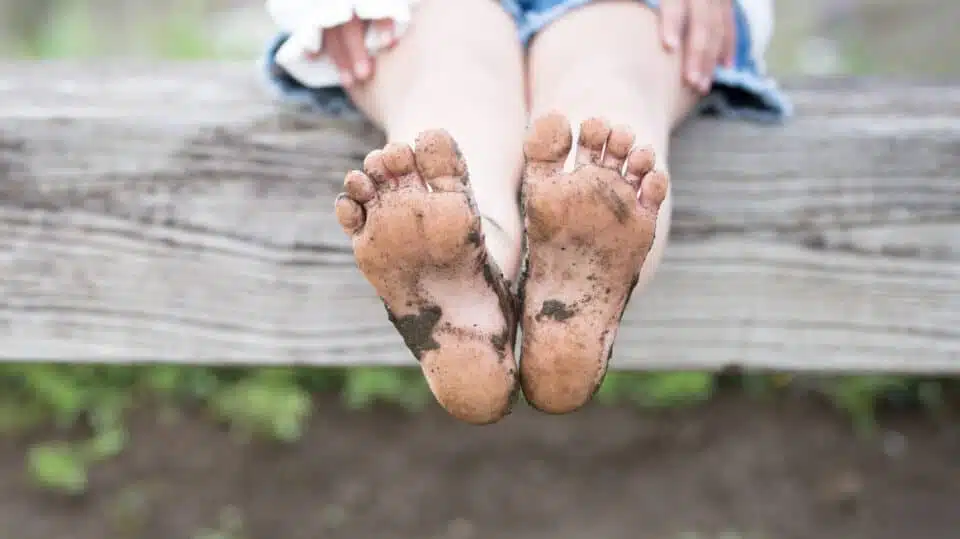
First off, do not panic. Children are developing beings. For the most part, common “foot abnormalities” in children spontaneously resolve as development progresses. At birth, a baby’s foot is made up of mostly cartilage, which hardens or ossifies to actual bones with age. Until a child’s foot develops adult bones, it will be very soft and flexible. As infants mature and learn to walk, their bodies undergo a process known as developmental unwinding where their limbs will unfold and externally rotate. In fact, the hips can unwind even up until age fourteen.

That being said, it’s important to pay attention to your child’s cues and any signs that may not align with typical developmental patterns. If your child complains of pain, “tired feet,” or seems overly clumsy or frequently trips, it’s important to speak with their paediatrician for further assessment. They may then recommend a visit to a foot care specialist for a biomechanical assessment to help prevent issues from persisting into adulthood.
Here is a list of common foot problems seen in children.
Flat Feet
Flat feet are part of normal development in children up until the age of six. If your child has a mild and flexible flat foot and is under the age of 6, there is a good chance he or she may grow out of it. However, if your child is severely flat-footed, is developing pressure points, and is experiencing symptoms (this includes not wanting to participate in activities or sports because of foot pain or discomfort), it is a good idea to seek professional advice. Your child may be recommended custom made orthotics or over the counter arch supports.
Treatment for flat feet typically involves an overhaul of your child’s footwear. If your child is overweight or sporting ill-fitting shoes, it can make the pain worse. You should seek guidance from your child’s paediatrician, and potentially a Foot specialist. They may recommend a pair of accommodating, comfortable shoes with arch support, over-the-counter insoles, stretches and exercises, or custom orthotics. You should also try not to let your child wear unsupportive shoes with poorly constructed soles that further exaggerate the flatness of their feet – think flip-flops or Converse sneakers.
In-Toeing

Toe Walking
Toe walking is a normal occurrence in children as they learn how to walk, up until the age of three. Most children who continue to toe walk after the age of three and are otherwise developing normally, do so out of habit. Other causes include a congenital short Achille’s tendon, or other disorders such as cerebral palsy, autism, and muscular dystrophy. In any case, talk to your child’s paediatrician regarding toe walking past the age of two. If your child is doing this habitually, it is important to establish a heel to toe gait with the help of routine stretching and recommended footwear.
Sever’s Disease
Sever’s disease is an inflammation of the growth plate in the heel bone. It is the most common cause of heel pain in growing children and young athletes, typically between ages 7–12, and is often linked to growth spurts and increased activity.
This condition is very common and usually resolves on its own once the growth plate matures.
Management focuses on reducing pain through rest from high-impact activities, regular stretching, and a biomechanical assessment to determine whether foot mechanics are contributing to symptoms.
Plantar Warts
Another one of the most common foot conditions for children, as well as adults, are plantar warts. Plantar warts are often found on the burdened areas of the foot, such as the heels and the ball of the foot. They are caused by a certain strain of the Human Papillomavirus(commonly known as HPV). You should be mindful of your child running around barefoot in public spaces, such as swimming pools. Likewise, you should also make sure your child’s feet are shielded and protected from the virus by ensuring any small cuts or scrapes are covered with a bandage. Your child’s plantar warts may go away on their own, but sometimes specialized treatment is required.
Treatment Methods Used to Target Plantar Warts:
- Salicylic Acid: Products with salicylic acid will soften the skin on your child’s feet, and shed the outer layer of skin quickly. A qualified Chiropodist may recommend this, and will painlessly peel the wart off after application of the product for some time. This is arguably the least intimidating treatment method for a child with a persistent issue with plantar warts.
- Cryotherapy: A foot specialist will gently apply a cotton swab with liquid nitrogen to the problem area, this will freeze the wart. Cool, right? The area eventually forms a protective blister, and after a few rounds of this the wart will be gone for good. It may be a little painful for your child, so talk to them about how beneficial it will be in the long run and make them feel brave!
- Cantharone: Cantharone treatment is a topical solution used to treat plantar warts. It contains a blistering agent that is applied directly to the wart by a chiropodist. The area is then covered, and a blister forms under the wart within 24–48 hours, lifting it away from healthy skin. The treated tissue is later debrided and the cantharone is reapplied until the wart resolves.
- Needling: It’s likely you’ll want to avoid any treatment containing the word “needle” when it comes to children. However, this surgical process can eradicate all plantar warts by focusing on one. The process includes puncturing the wart 100 times to trigger an immune response. It is often attempted if other treatments are unsuccessful.
Ingrown Toenail
An Ingrown toenail can be a painful nuisance for your child. They present themselves as small, red areas of swelling on your child’s skin, close to the toenail. They are typically harmless, but you should make sure they don’t become infected. An infection could cause the redness to spread, further aggravate foot pain, and lead to blisters.
If the Ingrown toenail doesn’t go away, your child can see a foot specialist who will be able to:
- Gain access to the ingrown toenail, trim it and safely remove the ingrown segment of the nail.
- Recommend antibiotic cream in the presence of infection. Oral antibiotics may also be prescribed.
- Recommend at-home care, such as using Epsom salt in a foot bath. Epsom salt can reduce pain and prevent infection.
- Recommend over-the-counter pain relief, such as Tylenol and ibuprofen.
- If your child has a persistent problem, they may suggest performing a minor surgery on the nail bed/toenail.