Open
Open


Pain in the ball of your foot can make walking, standing, running and even wearing shoes uncomfortable. One common cause is metatarsalgia, a general term for pain affecting the forefoot around the metatarsal bones.
Metatarsalgia can develop gradually or appear after an increase in activity. It may be related to footwear, foot structure, repetitive impact, pressure distribution, or another underlying foot condition.
The good news is that many cases of metatarsalgia can be managed with conservative treatment, including activity modification, footwear changes, cushioning, metatarsal pads, exercises and orthotic support. The right treatment depends on what is causing the pain.
Key Takeaways
- Metatarsalgia is pain in the ball of the foot, usually around the metatarsal heads beneath the toes.
- It can be caused by increased activity, footwear, foot structure, altered foot mechanics, or excessive pressure on the forefoot.
- Common symptoms include aching, burning, sharp pain, tenderness, or a feeling like there is a pebble in your shoe.
- Treatment often focuses on reducing pressure on the forefoot, improving footwear, modifying activities and using appropriate cushioning or metatarsal support.
- Metatarsal pads and orthotics may help some people by redistributing pressure, depending on the individual’s foot structure and symptoms.
- Ball-of-foot pain isn’t always metatarsalgia. Conditions such as Morton’s neuroma, stress fractures, sesamoiditis and arthritis can cause similar symptoms.
- If pain is persistent, worsening or interfering with walking, a professional foot assessment can help identify the underlying cause.
Experiencing pain in the ball of your foot? Feet First Clinic can help identify possible causes of your forefoot pain and develop a treatment approach based on your individual needs.
Book an assessment with a Feet First Clinic chiropodist to have your foot pain evaluated.
What Is Metatarsalgia?
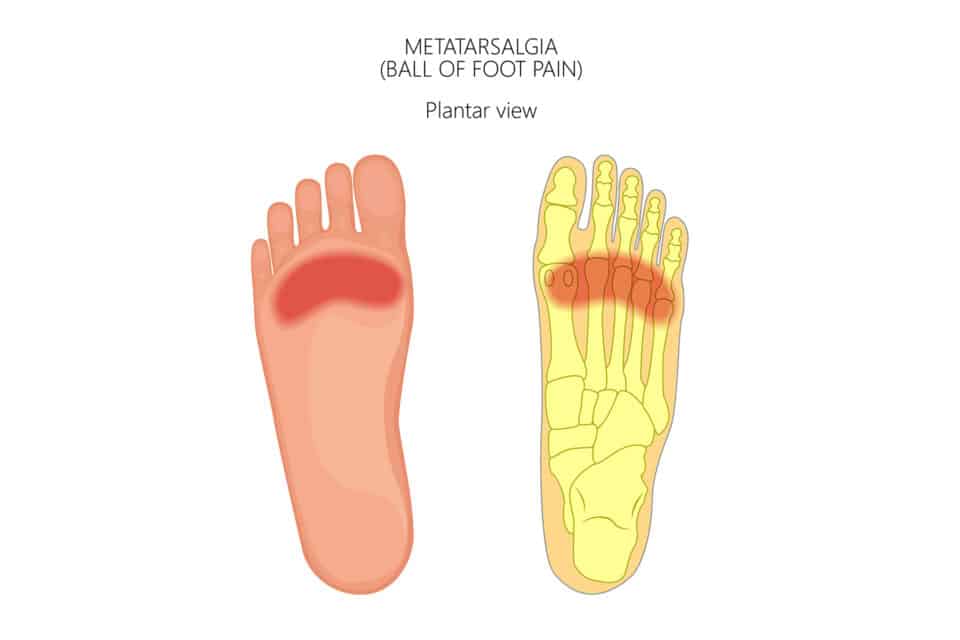
Metatarsalgia is pain and irritation in the ball of the foot, usually around the heads of the metatarsal bones just behind the toes.
The five metatarsal bones connect the middle of the foot to the toes. When excessive or uneven pressure is placed on the forefoot, the tissues around the metatarsal heads can become painful.
Metatarsalgia isn’t necessarily one specific disease. Rather, the term describes a pattern of forefoot pain that can have several different contributing factors.
Common symptoms include:
- Aching or sharp pain in the ball of the foot
- Burning pain
- Pain that becomes worse with walking, running or standing
- Pain when pushing off the toes
- Tingling or numbness in some cases
- A sensation that there is a pebble or small stone inside the shoe
- Calluses developing underneath areas of increased pressure
Mayo Clinic and Cleveland Clinic both describe pain in the ball of the foot as the characteristic location of metatarsalgia, with symptoms often becoming worse with standing, walking or high-impact activity.
Figure 1: Where Is Metatarsalgia?
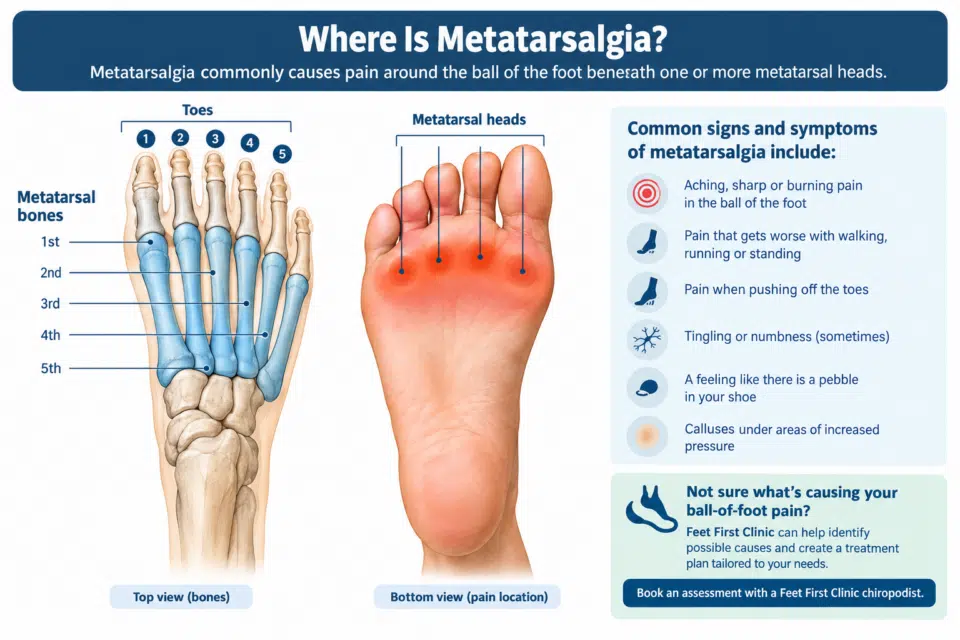
Figure caption: Metatarsalgia commonly causes pain around the ball of the foot beneath one or more metatarsal heads.
What Causes Metatarsalgia?
There isn’t always one single cause. In many cases, several factors contribute to increased pressure on the forefoot.
1. Increased Activity
Running, jumping and other high-impact activities place substantial forces through the forefoot.
A sudden increase in mileage, training intensity or activity can therefore contribute to forefoot pain.
This is particularly relevant for runners and people participating in sports involving repeated running and jumping.
2. Poorly Fitting Footwear
Shoes that are too tight, too loose, excessively high-heeled or otherwise unsuitable for your activity can increase pressure on the forefoot.
A narrow toe box may also crowd the toes and alter how pressure is distributed through the front of the foot.
3. Foot Structure and Mechanics
Certain foot shapes or structural changes can increase pressure under the metatarsal heads.
Examples can include:
- High arches
- Flat feet
- Bunions
- Hammertoes
- A relatively long second toe
- Changes in the position of the metatarsal bones
- Abnormal pressure distribution during walking
4. Calluses
A thick callus underneath the forefoot can be a sign that repeated pressure is occurring in that area.
The callus itself may contribute to discomfort, but it can also provide a clue about where excessive pressure is being concentrated.
5. High Heels
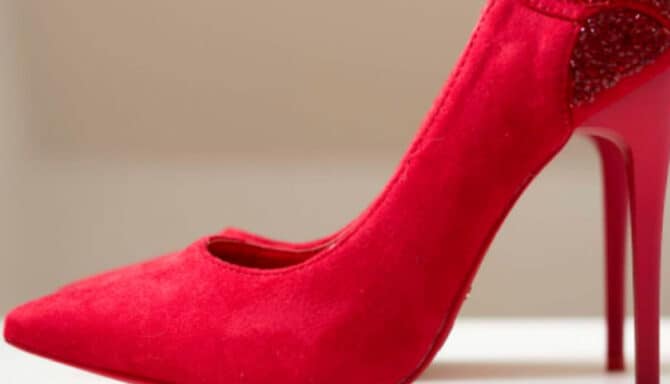
High-heeled footwear shifts more body weight toward the front of the foot, potentially increasing pressure around the metatarsal heads.
6. Foot and Joint Conditions
Forefoot pain can also be associated with conditions such as:
- Morton’s neuroma
- Arthritis
- Gout
- Sesamoiditis
- Stress fractures
- Inflammatory conditions
- Hammertoes
- Bunions
Because several conditions can produce similar symptoms, identifying the source of the pain is important before deciding on treatment.
Metatarsalgia Causes at a Glance
| Possible contributing factor | How it may affect the forefoot |
|---|---|
| Increased running or jumping | Repeated impact can increase forefoot loading |
| High heels | Shifts more pressure toward the front of the foot |
| Narrow footwear | Can crowd the toes and alter pressure distribution |
| High arches | May concentrate pressure under the forefoot |
| Bunions | Can change how weight is distributed |
| Hammertoes | May alter forefoot loading |
| Calluses | Can indicate areas of repeated pressure |
| Foot mechanics | May affect how force moves through the foot |
| Previous injury | Can change movement and pressure distribution |
| Other conditions | Neuroma, arthritis, stress fracture and other problems can mimic or contribute to forefoot pain |
What Does Metatarsalgia Feel Like?
People describe metatarsalgia in different ways.
The pain may feel:
- Sharp
- Aching
- Burning
- Shooting
- Tender or bruised
- Like there is a pebble in the shoe
Symptoms may become more noticeable when walking, running, standing for long periods or pushing off through the toes.
Some people also experience numbness or tingling in the toes.
QUICK ANSWER
What does metatarsalgia feel like?
Metatarsalgia usually feels like pain, aching or burning underneath the ball of the foot. Some people describe the sensation as walking on a pebble. Pain often becomes worse with walking, running or prolonged standing.
Metatarsalgia vs. Other Causes of Ball-of-Foot Pain
Not every case of pain under the toes is metatarsalgia.
| Condition | Typical clues |
|---|---|
| Metatarsalgia | Pain or tenderness beneath one or more metatarsal heads |
| Morton’s neuroma | Burning, shooting or nerve-like pain, often between the toes |
| Stress fracture | Localized pain that may worsen with activity and require imaging to investigate |
| Sesamoiditis | Pain beneath the big toe joint around the sesamoid bones |
| Arthritis | Joint pain, stiffness and reduced movement |
| Callus-related pressure | Localized tenderness beneath a thickened area of skin |
These conditions can overlap, and symptoms alone may not establish the exact cause. A healthcare professional may examine the foot and, when appropriate, use imaging to rule out other problems such as a stress fracture.
How Is Metatarsalgia Diagnosed?
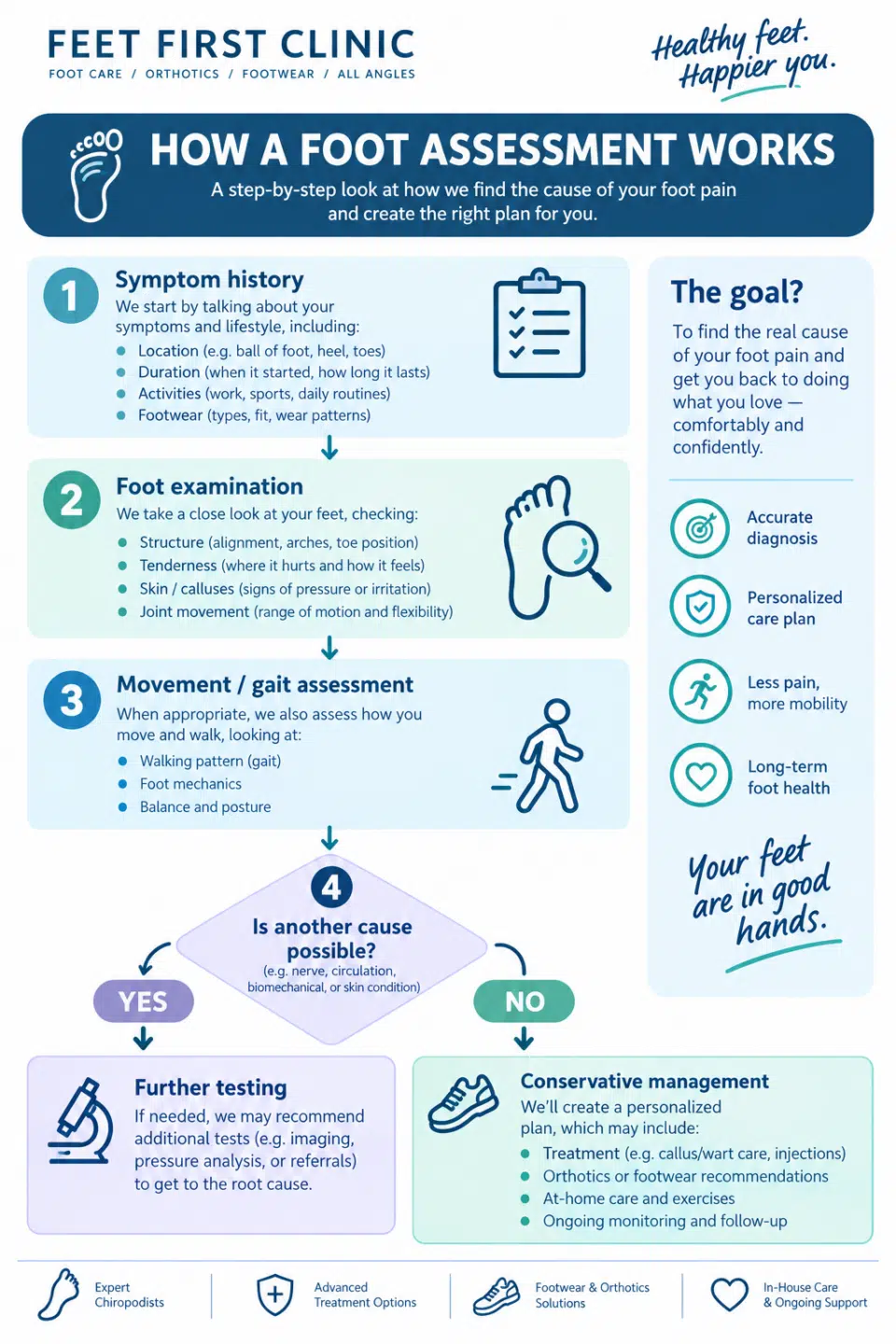
A healthcare professional will generally start by asking about:
- Where the pain occurs
- When it started
- What activities make it worse
- Your footwear
- Your exercise routine
- How much time you spend standing or walking
- Previous injuries or foot problems
The foot may be examined while sitting and standing, and your walking pattern may also be assessed.
Depending on the symptoms, imaging such as an X-ray may be considered to investigate other possible causes of pain. Ultrasound or MRI may sometimes be used when soft-tissue problems need further evaluation.
Experiencing Ball-of-Foot Pain?
If pain in the ball of your foot is making it uncomfortable to walk, exercise or stand for long periods, a professional assessment can help determine what’s contributing to your symptoms.
At Feet First Clinic, our licensed chiropodists can assess your feet, footwear and the factors contributing to your forefoot pain. Depending on your individual needs, treatment may include footwear recommendations, metatarsal pads, insoles or orthotics, activity recommendations and other appropriate foot-care options.
You don’t have to simply live with ongoing foot pain.
Book an appointment at Feet First Clinic for an assessment of your ball-of-foot pain.
Figure 2: How a Foot Assessment Works
How Do You Treat Metatarsalgia?
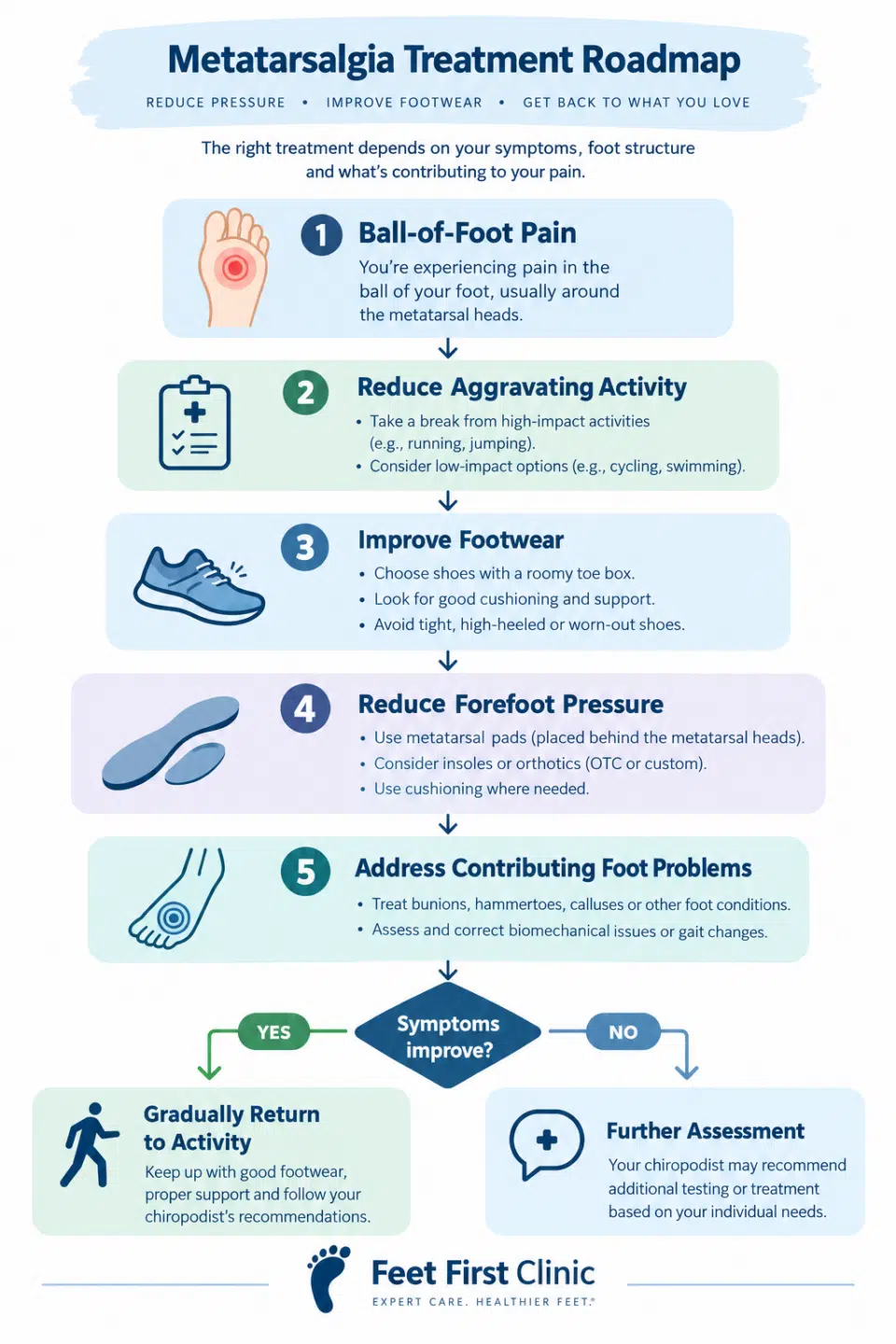
Treatment for metatarsalgia focuses on reducing excessive pressure on the painful area and addressing the factors contributing to the problem.
Treatment may include:
1. Reduce Aggravating Activities
If running, jumping or another activity is causing pain, temporarily reducing the activity can give irritated tissues an opportunity to settle.
Low-impact activities such as cycling or swimming may allow you to remain active while reducing repetitive impact on the forefoot.
2. Choose Supportive Footwear
Footwear can make a significant difference.
Look for shoes that provide:
- Adequate room for the toes
- Appropriate cushioning
- A supportive sole
- A comfortable fit
- Enough space around the forefoot
- A design appropriate for your activity
Avoid shoes that squeeze the toes or place excessive pressure on the ball of the foot.
3. Consider a Metatarsal Pad
A metatarsal pad can redistribute pressure away from the painful area.
Important: placement matters.
A metatarsal pad is generally positioned behind the metatarsal heads rather than directly underneath the most painful spot. Correct placement can help redistribute pressure through the forefoot.
Mayo Clinic specifically lists metatarsal pads and arch supports among conservative measures that may reduce stress on the metatarsal bones.
4. Try an Appropriate Insole or Orthotic
An insole or orthotic may help redistribute pressure and provide support depending on the underlying mechanics.
Not everyone with metatarsalgia needs a custom orthotic. Some people may benefit from an appropriate over-the-counter insert, while others may require a more individualized device.
Orthotic treatment should be based on the individual’s foot structure, symptoms and activity needs.
5. Address Contributing Foot Problems
If a bunion, hammertoe, callus, altered gait pattern or another foot problem is contributing to excessive forefoot pressure, addressing that factor may be an important part of treatment.
6. Ice and Rest
Ice and temporary activity modification may help reduce discomfort, particularly following activities that aggravate the area. Mayo Clinic recommends applying an ice pack for approximately 20 minutes at a time, with a towel protecting the skin.
Can Orthotics Help Metatarsalgia?
Orthotics may help some people with metatarsalgia by redistributing pressure and supporting the foot.
An orthotic can be designed or selected to address factors such as pressure distribution, arch support and foot mechanics.
However, there is no single orthotic that is appropriate for every person with metatarsalgia.
Depending on the individual, treatment may involve:
- An over-the-counter insole
- An accommodative insert
- A metatarsal pad
- A custom orthotic
- A combination of footwear and orthotic modifications
The goal is not simply to add more cushioning. The goal is to address the factors contributing to the forefoot pain.
Cleveland Clinic notes that orthotics can range from simple shoe inserts to custom devices and may be used for forefoot pain including metatarsalgia.
Can Shoes Cause Metatarsalgia?
Yes. Footwear can contribute to metatarsalgia.
Shoes that are too narrow, poorly fitted, excessively high-heeled or inappropriate for an activity can increase stress on the forefoot.
When choosing footwear for metatarsalgia, consider:
Toe box:
Your toes should have enough room to spread naturally without being compressed.
Sole:
A supportive and appropriately cushioned sole can reduce the impact placed on the forefoot.
Fit:
Shoes should not squeeze the ball of your foot or allow excessive movement inside the shoe.
Activity:
Choose footwear designed for the activity you’re performing.
What Exercises Can Help Metatarsalgia?
Exercises may be useful when appropriate, particularly when limited mobility, muscle weakness or altered foot mechanics are contributing to symptoms.
Depending on the individual, a healthcare professional may recommend exercises involving:
- Calf stretching
- Ankle mobility
- Toe mobility
- Foot-strengthening exercises
- Balance exercises
- Gradual strengthening of the intrinsic foot muscles
Exercises should not significantly increase pain. If an exercise consistently aggravates symptoms, stop and seek professional guidance.
When Should You See a Healthcare Professional?
Consider having persistent ball-of-foot pain assessed if:
- Pain continues despite changing footwear and reducing aggravating activities
- Pain is getting worse
- You have significant swelling
- You cannot comfortably bear weight
- You have numbness or persistent tingling
- Pain started after an injury
- You suspect a stress fracture
- Pain is interfering with your normal activities
- You have diabetes or another condition that increases your risk of foot complications
Persistent forefoot pain can have causes other than metatarsalgia, so an assessment can help determine whether further investigation is appropriate.
Can Metatarsalgia Be Prevented?
Not every case can be prevented, but you can reduce some contributing factors.
Helpful habits include:
- Wear properly fitting footwear.
- Choose shoes with adequate toe room.
- Replace excessively worn footwear.
- Increase exercise intensity gradually.
- Use activity-specific footwear.
- Avoid prolonged use of uncomfortable high heels.
- Address recurring calluses or pressure points.
- Consider appropriate support if your feet require it.
- Don’t ignore persistent forefoot pain.
Cleveland Clinic specifically recommends footwear with good soles, a wide toe box and a lower heel as part of prevention strategies.
Metatarsalgia: Frequently Asked Questions
What is metatarsalgia?
Metatarsalgia is a term used to describe pain affecting the ball of the foot, particularly around the metatarsal heads beneath the toes.
What causes metatarsalgia?
Common contributing factors include increased running or jumping, poorly fitting footwear, high heels, foot structure, bunions, hammertoes, calluses and other conditions that increase pressure on the forefoot.
What does metatarsalgia feel like?
It can feel like aching, sharp, burning or shooting pain in the ball of the foot. Some people describe feeling as though there is a pebble in their shoe.
How do you get rid of metatarsalgia?
Treatment depends on the cause. Common conservative approaches include reducing aggravating activity, changing footwear, using appropriate cushioning or metatarsal pads, and addressing foot mechanics. Persistent symptoms should be assessed by a healthcare professional.
Can walking make metatarsalgia worse?
Yes. Walking, running and prolonged standing can increase pressure through the forefoot and may aggravate symptoms.
Can running cause metatarsalgia?
Running and other high-impact activities can contribute to metatarsalgia because they place repeated forces through the forefoot. A sudden increase in training volume or intensity may increase the risk.
Are metatarsal pads good for metatarsalgia?
Metatarsal pads may help redistribute pressure away from painful areas of the forefoot. Their position is important, and the appropriate type and placement can vary between individuals.
Can orthotics help metatarsalgia?
They can help some people by supporting the foot and redistributing pressure. The appropriate type of orthotic depends on the person’s foot structure, symptoms and contributing factors.
What shoes are best for metatarsalgia?
Generally, look for footwear with adequate toe room, a comfortable fit, appropriate cushioning and a sole that provides suitable support for your activity. Avoid shoes that squeeze the forefoot or place excessive pressure on the ball of the foot.
How long does metatarsalgia take to heal?
Recovery varies depending on the underlying cause, severity and whether the contributing factors are addressed. Mild cases may improve with activity modification and footwear changes, while persistent symptoms may require further assessment and treatment.
Is metatarsalgia serious?
Metatarsalgia itself is not usually considered a serious condition, but persistent ball-of-foot pain should not automatically be assumed to be metatarsalgia. Other conditions, including stress fractures and nerve problems, can produce similar symptoms.
When should I see a foot specialist for metatarsalgia?
If your pain persists, worsens, affects your ability to walk or does not improve after changing footwear and modifying activities, a foot assessment can help determine the likely cause and appropriate treatment.
The Bottom Line
Metatarsalgia is pain in the ball of the foot that can result from increased forefoot pressure, footwear, activity, foot structure or another underlying condition.
Treatment usually begins with conservative measures such as:
1. Reducing aggravating activities
2. Improving footwear
3. Reducing pressure on the forefoot
4. Using appropriate cushioning or metatarsal support
5. Addressing contributing foot mechanics or conditions
If ball-of-foot pain persists or you are unsure what is causing it, a professional foot assessment can help distinguish metatarsalgia from other causes of forefoot pain.
Sources
- Mayo Clinic — Metatarsalgia: symptoms, causes, diagnosis and treatment.
- Cleveland Clinic — Metatarsalgia: symptoms, causes, diagnosis and treatment.
- Cleveland Clinic — Orthotics: types, benefits and uses for forefoot pain.