Open


October 22, 2026
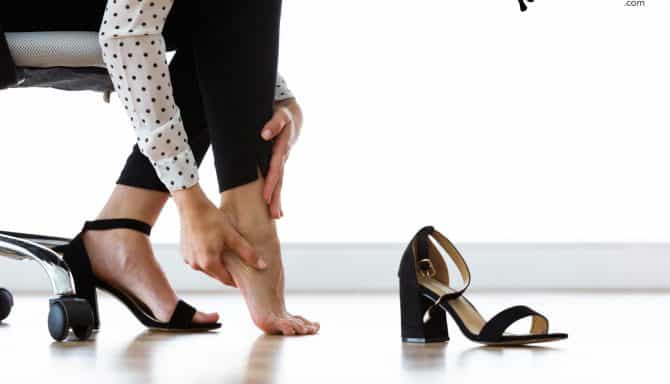
From retail workers to restaurant servers, foot pain at work can be frustrating for many people. If you work in an industry where you spend a lot of time on your feet, foot pain can interrupt your productivity, affect your mood, and affect the rest of your day. After work, you may have had plans to go for a run or walk, but after a draining day on your feet, you might just want to do nothing and wait for the foot pain to subside.
Luckily, Feet First Clinic is happy to promote ways you can maintain healthy feet. We're here to talk about some ways you can alleviate and prevent foot pain at work. Foot pain is not normal, and even though you spend most of your shift standing, you don't have to put up with the pain any longer. If you want to take your foot care to the next level, you can also book regular visits with a chiropodist.
How Can I Prevent Foot Pain at Work?
Wear comfortable footwear
Wear compression stockings
Incorporate foot stretches into your routine
Take sitting and standing breaks
Elevate your legs at the end of the day
Enjoy a foot bath
Try some foot care products
Wear Comfortable Footwear
This is a given, but you need to be wearing comfortable footwear that fits properly to avoid foot pain at work. Your shoes should fit snugly, give you enough toe room, and not place too much pressure on the foot's weight-bearing areas. Shoes should have a deep and wide toe box to ensure there isn't any pressure or friction in the toe area. The heel elevation, the material used on the body of the shoe, and the outsole and midsole (responsible for shock absorption) are also important factors. Insoles and custom orthotics should also be considered if you're prone to painful foot conditions.
To achieve your goal of pain-free feet, you can look into these footwear focused services offered by a licensed Chiropodist and foot clinic:
Orthopaedic footwear
Custom orthotics
Superfeet insoles
Shoe fitting
Shoe stretching
Wear Compression Stockings
When you’re sitting or standing for long periods, circulation slows and blood begins to pool in your lower limbs—leading to that heavy, achy feeling and even swelling by the end of the day. Compression stockings apply gentle, graduated pressure to your legs, helping push blood back up toward the heart and preventing it from settling in your feet. By improving circulation throughout the day, they reduce fatigue, minimize swelling, and help keep your feet feeling supported, comfortable, and protected at work.
Compression stockings are especially beneficial for teachers, healthcare workers, and flight attendants—roles that require long hours of standing or sitting and can increase the risk of venous conditions like varicose veins. Over time, this strain on circulation can lead to discomfort, swelling, and fatigue in the legs and feet. Even if you’re not currently experiencing symptoms, wearing compression socks can be a simple, proactive way to support healthy blood flow and help prevent issues from developing down the line.
Incorporate Foot Stretches Into Your Routine
Foot stretches that target Achilles tendon pain, Plantar fasciitis, top of the foot pain, toe pain, or any other foot soreness that's been bothersome can be a lifesaver. They're all easy to learn and take less than 5 minutes at a time. At the beginning and the end of the day, you should take the time to do your foot stretches. After a while, this will alleviate the foot pain you experience at work, and in time, prevent it all together.
Click for demonstrations of a few of our favourite foot stretches:
Calf stretch on a step
Golf ball stretch
Toe curls
Take Sitting & Standing Breaks
If you're working on your feet for long hours, you should make sure you take sitting breaks. If you're in-between shoes and still have to wear an ill-fitting pair, you should sit down and take your shoes off for the duration of your break. During this time, you can even try to get some of your foot stretching in! Try to avoid standing during your break if you have been standing all day. A break from standing can get you through the remainder of your shift and alleviate a lot of pressure on the weight-bearing areas of your feet.
The same applies if you’re on your feet all day—try to take regular breaks to sit down and elevate your legs when possible. Giving your body even short periods of rest helps relieve pressure, improve circulation, and prevent that buildup of fatigue in your feet and legs.
Elevate Your Legs Afte rWork
At the end of the day, elevate your legs above heart level for 15–20 minutes. This simple habit helps reduce fluid buildup that can lead to swelling, relieves pressure on your lower extremities, and supports better circulation by promoting venous return and overall blood flow.
Enjoy a Foot bath
A Foot bath at the end of the day can soothe your aching feet and prevent pain from progressing. Before bed, soaking your feet in hot water Reduces inflammation, which sets you up for a better morning. Hot water also stimulates circulation and blood flow. Foot baths aren't just great for foot pain! They can also soften your skin, alleviate stress, and fight fatigue. For even more benefits, you can incorporate Epsom salt and essential oils into your foot baths.
Try Some Foot Care Products
Foot pain at work doesn’t just show up as aching or soreness. Spending long hours on your feet can also lead to blisters, calluses, corns, cracked heels, and other common foot concerns.
Using targeted foot care products can help relieve discomfort from these conditions. Creams and balms with moisturizers like urea and glycerin are especially effective, as they help draw in moisture and soften thickened, dry skin. These ingredients can help improve hydration, reduce roughness, and keep feet feeling more comfortable throughout the day.
October 8, 2026
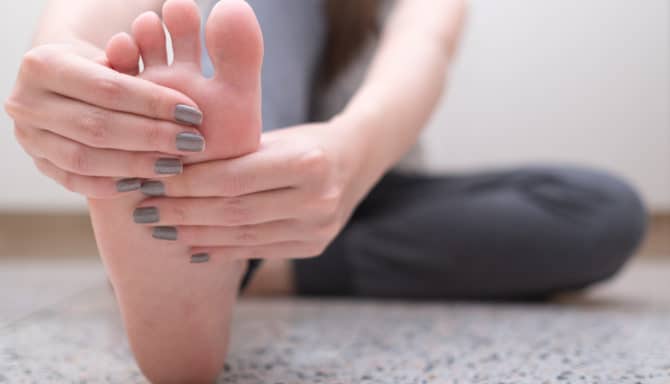
Have you walked around downtown Toronto with the feeling that you have a pebble stuck in your shoe? It can turn into a persistent nuisance that negatively impacts your daily exercise or routine. If this sounds like you, you may be experiencing a nerve compression syndrome which affects the nerves located at the base of the toes, called a neuroma.
The most common nerve to be affected is the one found at the ball of the foot, between the third and fourth toes. This nerve is naturally thicker than the rest, putting it at higher risk of developing a neuroma. A neuroma at this specific location on the foot is called Morton’s Neuroma. Irritation of the nerve at this location causes the nerve to enlarge or swell, making it more vulnerable to compressive stresses.
What Are The Symptoms Of Morton's Neuroma?
Localized pain that radiates to the toes when wearing shoes or while walking.
Feeling like you’re walking on a pebble.
Numbing, tingling, or burning sensation in your foot and feeling like you have to take off your shoes to rub it for relief.
Sharp pain in your foot.
Pain that radiates from the ball of your foot to your toes.
Photo by Artem Beliaikin from Pexels - Thank you!
What Causes Morton's Neuroma?
It is very likely that the cause of your neuroma is poor foot mechanics, with the most common one being overpronation. Overpronation is the involuntary act of rolling the ankles towards the arches as one walks. As the foot pronates more than it should, the metatarsals also move more than they should. This leads to compression and subsequent irritation of the nerves, resulting in pain and inflammation.
How Can I Treat Morton's Neuroma?
Your goals should be to:
Remove pressures from the area of concern.
Allow the nerve to heal.
Prevent future incidences of discomfort.
In summary, overhauling your footwear can make the biggest difference. Booking an appointment with a qualified foot specialist is a great next step. A chiropodist will perform a biomechanical assessment and gait analysis to identify the root cause of your Morton's neuroma. From there, they can assess your foot type, evaluate your walking pattern, and recommend appropriate footwear.
If underlying biomechanical issues are present, custom-made orthotics may be prescribed to improve foot mechanics, control pronation, and redistribute pressure away from the neuroma. These often include features like a metatarsal dome pad, which helps relieve nerve pressure by gently splaying the metatarsal bones.
For more immediate relief, over-the-counter metatarsal pads can be added to your existing insoles. Choosing shoes with a wider fit, a roomy toe box, and a lower heel can also significantly reduce discomfort and help prevent symptom flare-ups.
Finally, if more conservative treatments aren’t providing relief, ultrasound-guided steroid injections may be considered. This involves delivering a corticosteroid (a powerful anti-inflammatory) directly to the affected area while using ultrasound imaging to precisely target the nerve. By placing the medication exactly where it’s needed, this approach helps reduce inflammation around the nerve and can provide relatively fast, effective pain relief.

August 13, 2026
It’s easy to assume that bad footwear will only hurt your feet, but it can quickly create a domino effect hitting other parts of the body. Unsupported shoes impact your foot position, which impacts your posture, which impacts your spine and back muscles.
Shoes that Cause Back Pain
For example, high heels put pressure on the balls of your feet and push your legs forward — to compensate for the shift in weight the upper-body tilts backward. The balancing act changes your straight up-and-down posture, forcing you to arch your lower back and to stick your pelvis forward. The position strains the spine and the lower back muscles.
Flat shoes like flip flops also lead to back pain because they offer no arch-support or grip whatsoever. The design changes your gait by forcing you to put more weight onto the outside edges of your foot in place of an unsupported heel. The weight disbursement alters the rotation of your legs while walking, putting more stress onto the lower spine.
Another factor that can contribute to back pain is poor shock absorption. Shoes that provide little to no cushioning—often flat shoes with thin midsoles—can increase strain on the body. Each step we take generates impact that must be absorbed somewhere. Normally, footwear helps reduce this force, but when shoes lack proper shock absorption, the impact travels through the feet, up the knees, and into the lower back. Over time, this repeated stress can place excess strain on the joints in the lower back and contribute to back pain.
Solutions for Back Pain
Replace Unsupportive Footwear
The first step to alleviating back pain is to get rid of unsupportive footwear.
Instead, opt for shoes with good cushioning and thicker midsoles designed for shock absorption. Materials like cork and EVA are naturally shock absorbent and help reduce the impact each step has on your spine.
It’s also a good idea to swap out flip flops for supportive sandals that offer cushioning, arch support, and ideally an ankle strap. An ankle strap helps keep the sandal securely on your foot and prevents toe clawing, which can otherwise alter your gait when you walk.
Finally, instead of traditional high heels, consider supportive flat dress shoes. If you must wear heels, choose shoes with a thicker block heel and keep the height under two inches to help minimize strain on your spine.
Custom Orthotics
Another way to tackle back pain is by using orthotic inserts in your shoes—although they won’t work with certain footwear styles, such as flip flops.
One of the clearest signs that you may benefit from custom orthotics is chronic pain in your feet, ankles, legs, hips, or lower back. Orthotics are commonly used to help alleviate back pain by improving alignment, supporting the feet, and promoting better posture.
Orthotics are inserts that fit inside your shoes to provide additional support, stability, and cushioning while improving overall function. For the best results, these inserts can be customized to your unique foot size, shape, and arch type.
As an added benefit, custom orthotics can also help people dealing with common foot problems. Individuals living with bunions, plantar fasciitis, or heel spurs often benefit from these medical-grade devices because they help redistribute pressure and improve the way the foot moves during walking.
To get custom orthotics, you would typically book a biomechanical assessment with a licensed chiropodist. During this assessment, the chiropodist will evaluate the range of motion in your feet and ankles, examine how you bear weight, and perform a gait analysis to determine your walking pattern. Based on their findings, they can provide a diagnosis and, if appropriate, cast your feet for custom orthotics designed to suit your footwear and daily activities.
Other Solutions for Back Pain
Some simple home remedies for back pain are cold and hot therapies — start by addressing the pain with a cold compress, then use a hot water bottle on the same area two days later. The cold will combat pain and swelling. Heat will improve blood circulation and relax tightness.
If the pain is severe enough to keep you in bed for longer than a few hours or if it has you cancelling your plans for the next day, you should see a doctor. Sharp and intense back pain is not going to be caused by your footwear, but it can be exacerbated by it. The last thing you want when you have a slipped disc or a pulled muscle is an unsupported pair of shoes.

June 4, 2026
Our legs are a complex and intricate system of bones, joints, and muscles. Everything is interconnected in some way.
Muscles and joints rely on each other to perform properly, and to provide the necessary foundation for our body. Our habits, genetics, and environment all affect our feet. With so many different possibilities for foot conditions to arise, it's important to remember that correlation is not causation.
Just because we do one thing, does not necessarily mean it causes another. To help clear the air over a sample of common foot myths, we decided to debunk a few of them below.
1. Flat feet are bad
About 30% of the population lives with flat feet.
Flat feet are defined as a postural deformity in which the arches of the foot collapse. As a result, the entire foot makes contact with the ground. The foot is characterized by a very low arch, and can other foot conditions because of the leg's compensation.
Flat feet can develop in one foot, or both, depending on your body's development.
According to Harvard Medical School, even in adulthood, 15% to 25% of people have flexible flatfeet. Most of these people never develop symptoms. For those with what's called rigid flat feet, several measures can be taken to reduce pain and live comfortably with flat feet. These include:
Custom orthotics that artificially raise the arch and provide support
Strengthen and stretch your calf as this reduces the pressure and load on your arches
Supplement some high-impact exercise with low-impact activities like swimming, cycling, or spinning
Wearing slippers or supportive footwear inside instead of walking around barefoot
Proper fitting footwear with motion control and stability
Foot strengthening and exercises
2. Wearing heels causes all of women's foot problems
Additionally, a common misconception is that high heels cause bunions. This isn't true. Heels aggravate bunions but are likely not the cause.
However, excessive heel usage can result in a few common foot conditions: Corns, Hammertoe, Calluses and Haglund's deformities (called the "pump bump"). Additionally, you're at a greater risk of osteoarthritis since you may lose fat under your foot.
According to WebMD, you can prevent certain foot conditions while continuing to wear heels. Some of these preventative measures include:
Get the well-fitted high heel
Use silicone metatarsal pads for under your feet
Wear a thicker heel for stability
Pay attention to the "slope" or "pitch" of the heel
Wear open-toe high heels to relieve pressure on corns and calluses
Wear heels that are no more than 2" high
3. A bunion is just a bump
A bunion may look like just a bump. However, that's another in the list of foot myths. If only it were that simple...
Depending on the cause, your habits may worsen the condition. Maybe you wear shoes with a narrow toebox. Without correction, bunions can get a lot worse over time, turning just a bump into severe pain.
A Bunion, or hallux valgus, is a bony protrusion that forms at the site of the large joint that connects your big toe to your foot. As you can expect, without addressing the cause of bunions, the toe angle's alignment can sharpen, causing a larger bump.
It should be noted that bunions can be hereditary, in which case you might be doing everything right. Hereditary bunions are linked to inheriting foot structures such as flat feet or faulty bone mechanics rather than inheriting the bunion structure itself. Inherited conditions such as hypermobility or shortened Achilles tendons can largely increase the risk of developing a bunion. In this instance, continue to practice proper foot habits like:
Footwear modification, i.e., avoiding tight shoes with a narrow or stiff toe box.
Anti-inflammatory medications
Bunion splints
Bunion aligner
Therapeutic taping
Supportive insoles or custom orthotics
Anti-inflammatory gels (but not NSAID oral medication)
You should consult a foot specialist to see whether or not action needs to be taken.
4. Foot pain is the result of getting old
Reword the first paragraph: Foot conditions, such as osteoarthritis, are common as we age. Osteoarthritis is a degenerative joint disease caused by the breakdown of joint cartilage and changes in the bone structure causing joint pain, stiffness and reduced mobility.
However, osteoarthritis can occur at any age. Individuals who train or play high level or high impact sports may experience osteoarthritis even as early as their 20s. The most common areas for osteoarthritis include the big toe joint, knees and hips.
Osteoarthritis is a progressive and degenerative disease meaning that the damage is irreversible. Physical therapy can aid in providing strength to the muscles surrounding the affected joint and can alleviate pain. Common treatments include functional stretches and movement exercises and managing symptoms with proper support or bracing.
5. Surgery will fix foot problems
Surgery can help fix certain foot conditions, but non-invasive options may work equally well, if not be more effective.
There are several factors to consider when deciding on foot surgery:
Necessity
Success rate
Cost
Recovery time
Long-term effectiveness
Certain progressive conditions like hallux rigidus, bunions, and a ruptured Achilles may require surgery to correct the inherent problem. However, physical therapy can also improve quality of life. Proper orthotics, avoiding high-impact exercise, proper footwear, and strengthening can help limit pain associated with certain foot conditions.
However, surgery removes the bone portion of the injury. For those with Hallux Rigidus, the Bone Spur contributes to the toe's stiffness. The range of motion won't improve without surgery. Although, the worsening of the condition can be slowed with physical therapy as mentioned above.
For those with a Bunion, you’ll want to explore All Non-Invasive Measures before deciding on surgery. If you have explored all options, surgery may be an option. Typically, those who experience significant pain, have severe toe deformities, and have chronic inflammation are the likely candidates for surgery. Bunion surgery (of which there are a few) can include several correct measures:
Realigning the metatarsophalangeal (MTP) joint at the base of the big toe.
Pain relief.
Correcting the deformity of the bones, especially if your big toe is drifting inwards towards your second metatarsal.
If you're unsure about foot conditions, toenail conditions, or skin conditions, contact us at Feet First Clinic to set up an appointment. You can do that below, or by Contacting Us Here!

May 14, 2026
Choosing the right running shoe size is one of the most important—and often overlooked—factors in preventing foot pain and injury. Many runners have heard they should size up, but is that actually true?
The short answer: slightly bigger running shoes are usually recommended—but not too big. The goal is a precise fit that allows for natural foot movement without causing instability.
Why Runners Often Need Bigger Shoes
When you run, your feet behave differently than when you’re standing still.
Feet swell during activity due to increased blood flow
Impact forces cause your foot to expand and spread
Downhill running pushes your toes forward
Because of this, wearing your exact everyday shoe size can lead to discomfort and injury over time.
How Much Bigger Should Running Shoes Be?
A general guideline is to leave about a finger's width (½ inch) of space between your longest toe and the front of the shoe.
This extra room helps:
Prevent black toenails
Reduce pressure on the toes
Avoid blisters and nail trauma
However, sizing up too much can create new problems.
What Happens If Your Running Shoes Are Too Small?
Shoes that are too tight can cause:
Blisters and calluses
Black or bruised toenails
Ingrown toenails
Increased risk of conditions like hammertoes
General foot pain and numbness
Over time, repeated pressure can lead to chronic issues.
What Happens If Your Running Shoes Are Too Big?
Bigger isn’t always better.
Oversized shoes can lead to:
Heel slipping
Instability while running
Increased friction and blistering
Poor running mechanics
The goal is roomy—not loose.
Signs Your Running Shoes Fit Properly
A well-fitting running shoe should:
Have about ½ inch of space at the toe box
Feel snug (but not tight) around the midfoot
Hold your heel securely without slipping
Allow your toes to wiggle freely
Trying shoes on at the end of the day—when your feet are slightly swollen—can help you find the best fit.
Do You Always Need to Size Up?
Not necessarily. Shoe sizing varies between brands and styles, so focus more on fit than the number on the label.
You may need to size up if:
You’re running long distances
You experience toe pain or bruising
Your feet swell significantly during activity
But if your current shoes already meet the fit criteria above, you may not need a larger size.
Tips for Choosing the Right Running Shoes
Try shoes on with your running socks
Test them later in the day
Walk or jog in-store if possible
Replace shoes regularly (every 500–800 km)
Consider a professional fitting if you have recurring foot pain
The Bottom Line
Yes, most runners benefit from wearing slightly bigger shoes—but only enough to allow for natural foot expansion. The right fit can help prevent common running injuries and keep you comfortable mile after mile.

January 8, 2026
Hiking is a great form of exercise and a fun way to get outdoors during the colder months of the year. However, if you’re planning on going for a hike, you need to know how to keep your feet warm and safe. Not only will this keep you comfortable during your journey, but it will also minimize the chances of you getting frostbite or another cold-related issue. That is why we are highlighting our top winter hiking tips, with a focus on proper footwear and keeping your feet protected in icy and snowy conditions. Continue reading to learn more about how you can protect your feet while hiking in the winter.
Wear Boots That Fit Properly
Before going on a hike, you need to assess the quality of your footwear. Preferably, you have a pair of warm boots that you can wear. By wearing boots, you’ll be able to walk in deep snowdrifts without worrying about getting your feet wet. Look for boots that are waterproof and insulated. If your boots are not insulated, be sure to wear them with a wool sock (more on that below).
However, it doesn't matter how warm your boots are if they don't fit. Tight-fitting boots will restrict circulation, which will make your feet feel cold no matter what you do. That's why boots should fit properly: When purchasing boots, try them on in-store with a warm, thick sock. When in doubt, it's better to go too big than too small.
Wear The Right Pair Of Socks
Everybody knows that you should never go on a winter hiking trip without a warm pair of socks. Look for thermal socks with thermoregulating materials like merino wool. Materials will not only keep your feet warm; they're also breathable, meaning you won't need to worry about foot sweat (moisture buildup from foot sweat will make your feet cold).
Whatever you do, do not double-layer socks; the increased thickness can make your shoes too tight, which will restrict circulation and make your feet colder.
If you have poor circulation or suffer from conditions like Peripheral neuropathy (nerve damage caused by diabetes), you may want to wear a pair of compression stockings. Compression stockings are high-quality garments that are made to stimulate the blood flow in your feet and lower body. These garments can help prevent pain in several ways. Some benefits include:
Boosting circulation to your lower extremities to help keep them warm
Decreased swelling in your ankles and knees
Minimizing aching and overall discomfort
Reducing leg and foot fatigue
If you don’t currently suffer from any of the issues mentioned above, you can still benefit from wearing compression stockings! They can help prevent issues like:
Blood clots
Varicose veins
Complications due to venous disorders
Keep Your Feet Dry
Keeping your feet dry is just as important as keeping them warm during winter hikes. Moisture from snow, slush, or sweat can quickly lower foot temperature and increase the risk of blisters, irritation, and cold related injuries. Choose waterproof or water resistant boots whenever possible, and consider wearing moisture wicking socks to help pull sweat away from the skin. Packing an extra pair of socks in your backpack is also a smart idea, as changing into a dry pair during or after your hike can significantly improve comfort and help protect your feet from the cold.
Wear Shoes with Good Tread
Winter can make for slippery conditions. Whether it's slush, snow or ice, it's easy to lose your footing on winter trails. That's why it's important to look for shoes with a good tread and traction. The outsole should be rubber or a high-abrasion rubber compound. Tread depth and tread pattern is also very important. Ideally, the tread depth should be at least 5 mm, and the pattern should have many small shapes. A waterproof hiking shoe or hiking boot usually will do the trick!